29-04-1864: Holy Trinity Church, Kew, Melbourne, Victoria, Australia.

South Bourke Standard, Vic, Friday 29th April 1864, page 2.

 1864 ‘NOTES AND NEWS.’, South Bourke Standard (Vic. : 1861 – 1873), 29 April, p. 2, viewed 13 February, 2012, http://nla.gov.au/nla.news-article66905452

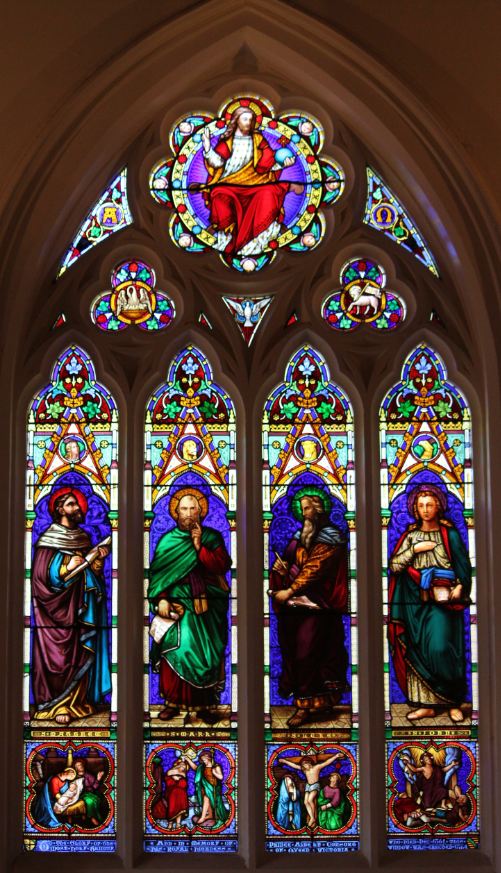
 “A memorial window for H.R.H. the late Prince Consort has been erected in Trinity Church, Kew. It is a four-light window with tracery. The main lights contain figures of the four Evangelists, each surmounted with his emblem and a richly-foliated canopy. Under the figures are four subjects illustrating the birth, baptism, crucifixion and resurrection of our saviour. The principal compartment of the tracery is filled with a representation of our Saviour on a throne surrounded by seven cherubims. The other compartments are filled in with emblems, consisting of the Pelican feeding its young with its own blood, the Lamb and Banner, and the Alpha and Omega. At one end of the inscription at the bottom are the arms of Prince Albert, and at the other end the same, quartered with the Royal arms. The inscription runs thus:- “To the glory of the Most Holy Trinity, and in memory of his Royal Highness Prince Albert, Consort of Queen Victoria, who died A.D. 1861, this window was erected A.D. 1864.” Antique glass has been the material used, the richness of tone and color of which adds to the beauty of the design and workmanship. It has been produced at the works of Messrs. Ferguson and Urie, glass-stainers, Curzon street, North Melbourne, and the finished and superior style of workmanship reflects great credit on the firm”.

Window Text:

MATTHEW, MARK, LUKE, JOHN.

TO THE GLORY OF THE MOST HOLY TRINITY AND IN MEMORY OF HIS ROYAL HIGHNESS PRINCE ALBERT CONSORT OF QUEEN VICTORIA.

This slideshow requires JavaScript.

Related posts: 03-04-1863 > 24-03-186413-08-1867

24-03-1864: Holy Trinity Church, Kew, Victoria, Australia.

The Australian News for Home Readers, Vic, Thursday 24th March 1864, page 3.

 “RELIGIOUS INTELLIGENCE”

 “The ceremony of opening the additional part of Holy Trinity Church, at Kew, took place on the 5th instant, just twelve months after the first part of the building was opened […]”

“[..]A magnificent stained-glass window, to cost about £230, has been ordered for one end of the building. The window will contain figures of the four Evangelists, surmounted with a representation of our saviour […]”

Note: This is in reference to the Prince Consort window by Ferguson & Urie.

Prince Consort Memorial window at Holy Trinity Kew

The Prince Consort Memorial window at Holy Trinity Kew

Related posts: 03-04-186329-04-1864 > 13-08-1867

19-09-1863: Norman Lodge AKA Manyung, Mornington Peninsula, Victoria.

In 1863 Richard Grice of the firm “Grice, Sumner & Co” had his mansion named “Manyung” built at Mornington Peninsula on coastal land then locally known variably as “Schnapper Point” or “Snapper Point”. The most striking decoration to the mansion was a three light secular stained glass window of Gothic design crafted by the North Melbourne stained glass firm Ferguson & Urie circa September 1863[1].

Photos: Attribution to contributors are shown on each of the images. Acknowledgements appear at the bottom of the article.

This slideshow requires JavaScript.

The three light Gothic design window depicts Grice’s family crest in the centre light, showing a row of three wild boars on the background of a white shield. This shield is further surrounded by depictions of the Passion Flower on a deep purple background. The outer lights depict further floral emblems and the Passion Flower with predominant background colours of crimson and purple and intricate borders. At the apex is the Lion with the numeral years 18 and 63 flanking it in gold lettering on a crimson background. The base of the right light includes the rare occurrence of the company name “FERGUSON & URIE Nth MELBne” in yellow lettering on a red background.

Richard Grice was also a liberal benefactor to the building of St Mark’s Church at Collingwood (now zoned in Fitzroy), having contributed nearly £13000 towards it’s erection[2] as well as £1000 annually[3]. In 1863 it was contemplated to have a stained glass window erected in St Mark’s “…to perpetuate the recollection of his munificence…”[4]  The designs for the window were prepared[5] by Ferguson & Urie but it was never created despite being mentioned again some fifteen years later, in 1878[6].

Richard Grice died of a stroke on the 4th of November 1882 and was buried in the Melbourne General Cemetery on the 6th[7]. After his death ‘Manyung’ changed hands a number of times and in 1947 was purchased by Norman Myer (1897-1956), of the now Coles Myer conglomerate. Myer renamed ‘Manyung’ to ‘Norman Lodge’ and made considerable changes as well as the addition of outbuildings. The property was primarily used for his staff as a holiday house and convalescence home.

As at 2013 Norman Lodge is owned by developer Chas Jacobsen who purchased the property in 2006.

The Argus, Melbourne, Saturday 19th September 1863, page 5.

“The staining of glass may now be included in our list of colonial industries. A specimen of this art, in the shape of a large window intended for the staircase of Mr. R. Grice’s mansion, at Schnapper Point, has just been completed by Messrs. Ferguson and Urie, of Curzon-street, North Melbourne. It is a three light window of Gothic design and it will occupy a space of something like eighty-four square feet. The centre light contains Mr. Grice’s armorial bearings, and the foliage of the passion flower; the outer lights have each a Gothic rose, with the foliage of the oak; while in the upper portion of the window is the figure of a lion surrounded by rose blossoms. The leading colours are ruby and blue, and in working out the details, these tints are so modified as to create a most harmonious whole. The articifers are entitled to great credit for the skilful way in which they have executed their commission. We understand that a colonial stained glass window can be supplied at thirty-three percent less than the market price of such an article imported from England. This intelligence will no doubt be received with satisfaction by churchwardens and others who take a delight in the decoration of ecclesiastical edifices. For some years past, in the mother country, the memorial window has been deemed a more becoming memento mori than the mural monument; and there is no reason why a similar taste should not be created and fostered in Victoria.”

The Argus, Melbourne, Vic Monday 6th November 1882, page 8.

“DEATH OF MR. RICHARD GRICE.

We regret to record the death of Mr. Richard Grice, senior partner in the well known firm of Messrs. Grice, Sumner, and Co., which took place at his town residence, Victoria-parade, Fitzroy, at an early hour on Saturday morning, from paralysis. About three months ago Mr. Grice had a slight attack of paralysis, but he had partly recovered from it, when six weeks ago he was again stricken down. This second attack was a very severe one, and from the first his medical attendants, Drs. Howitt and Williams, had no hope of his recovery. Mr. Grice was born at Bootle, Cumberland, England, England, on the 30th of October, 1813, and was consequently just turned 69 years of age. He was a colonist of 44 years standing, having arrived in Melbourne in 1838 in company with the late Mr. Benjamin Heape, a partnership having been entered into between them in England. They at once commenced business as merchants in Flinders-lane, under the title of Heape and Grice, and they were also interested in squatting properties at Mount Alexander. In 1847 Mr. Grice paid a visit to Europe, and was absent from the colony for about 12 months, when he returned, and he has resided there ever since. The partnership with Mr. Heape was dissolved in 1854, and Mr. T. J. Sumner joined the firm, the title being altered to that of Grice, Sumner, and Co. In 1856 Mr. John Benn was admitted as a partner, and the business of the firm as general merchants and free and bonded store proprietors was principally carried on by the junior partners, Mr. Grice not having taken an active part in the business for many years. The deceased gentleman had for a long period occupied a seat on the board of directors of the Union bank, and that was the only public position he ever accepted. He never took an active part in either politics or municipal affairs. He evinced great interest in our charitable and religious institutions, and was for some years one of the vice-presidents of the Melbourne Hospital. He however, took no active part in management, but contented himself by subscribing liberally. He also materially assisted, by his handsome contributions, in the completion of St. Mark’s Church of England, Fitzroy. Some years ago he purchased an estate at Mornington, and latterly he spent a good deal of his time there. The firm of Grice, Sumner, and Co. is one of the oldest, and ranks amongst the foremost, mercantile houses in the Australian colonies. The deceased leaves a widow, three sons, and four daughters, two of the former and one of the latter being married. The funeral will leave his late residence at 1 o’clock this afternoon for the Melbourne Cemetery. The Very Rev. the Dean of Melbourne will conduct the burial service”.

External links:

Biography – Richard Grice (1813-1882)

Biography – Norman Myer (1897-1956)
Footnotes:

[7] The Argus, Melbourne, Vic Monday 6th November 1882, page 8.

Thanks to:

Michael Galimany of Lovell Chen Architects & Heritage Consultants for the correspondence, and photographs with the permission of Mr Chas Jacobsen, 28 May 2013.

Michael Pater of Pater Leadlights, Beaconsfield, Vic for the detailed photos of his restoration work pieces. The artist who performed the glass painting was Robyn Lingard of “Robyn Lingard Glassworks”.


Short link to this page: https://wp.me/p28nLD-3S

© Copyright

07-07-1863: The Ebenezer St John’s Church Armstrong Street Ballarat.

The Star Ballarat, Tuesday 7th July 1863, page 2.

Messrs Urie and Ferguson, of Melbourne, have just completed two stained glass windows at the west end of the newly erected United Presbyterian Church in Armstrong street. These lights are very handsome, and were designed by Messrs Urie and Ferguson, the pattern exhibiting the trefoil with circles and diamonds, scrolls and foliage making up the margins. The coloring is rich but mellow, and the windows are certainly a great ornament to the church. We believe there is some intention of having colored glass put in the triplet of the large east window. The western lights we have mentioned have been supplied for £80”.

Photos taken 6th November 2011.

This slideshow requires JavaScript.

The “Ebenezer” United Presbyterian Church in Armstrong street was opened on the 23rd June 1863 [1] It was designed in the Anglo-Norman style by local architect Henry Richards Caselli (c1816-1885). The two stained glass windows by Ferguson & Urie were provided by the ladies of the congregation with the initial suggestion coming from Georgiana Caselli who also provided £5 as a subscription towards the windows[2].

The church is now known as the “Ebenezer St John’s” church, at 212 Armstrong street. The stained glass for the triplet window mentioned never eventuated.

Footnotes:

25-05-1863: Post Office buildings, Bourke Street, Melbourne.

The Argus, Melbourne, 25th May 1863, page 4.

“The large transparency exhibited on the rejoicings day, at the New Post-office-buildings, by the contractors, Messrs. T. Glaster and Co., was lit up again on Saturday evening. This transparency was not noticed in our columns on Wednesday, and we may, therefore, now mention that it is constructed of glass, and measures twelve feet by seven. In the centre are full-length portraits of the Prince and Princess, and at the base are the Royal arms. The figures are surrounded by an elaborate border of flowers, and surmounted with the Prince of Wales’s feather, and two flying cupids, bearing the motto, “Ich Dien”. The transparency is the work of Messrs. Ferguson and Urie, glass stainers, North Melbourne. At the Protestant Hall, transparencies were exhibited in which the arms of England and Denmark appeared, together with loyal mottoes. At Mr. R. D. Harte’s, Queen-street, there was an illumination with variegated lamps in oil, displaying the Prince and Princess of Wales and a loyal motto”.

The post office was completed in 1867 and gutted by fire 12th September 2001. Nothing further known about the window.

Historical images of the Melbourne Post Office, Bourke street, c.1890, from State Library Collections, others from my recent expeditions to the city.

This slideshow requires JavaScript.

03-04-1863: Holy Trinity Church, Kew, Melbourne, Victoria.

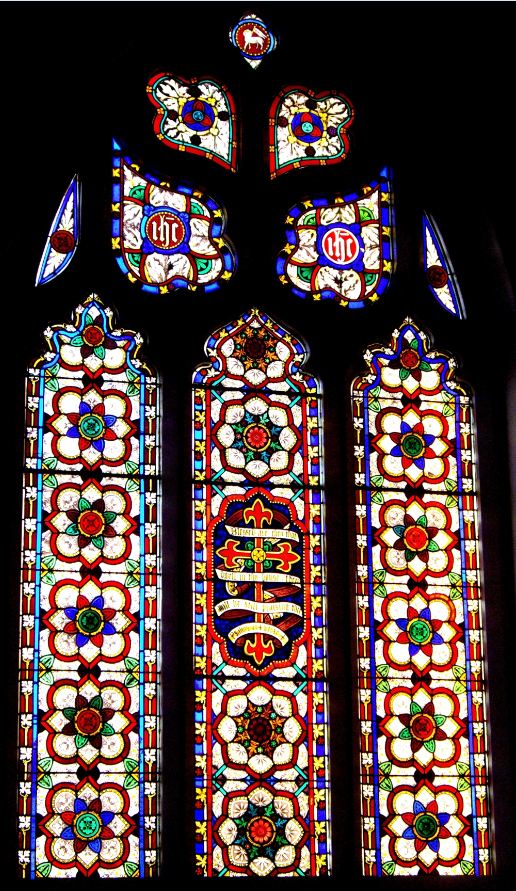
Only five extant windows by the historic Ferguson & Urie stained glass company of North Melbourne have the company name on them. This one at Holy Trinity Church at Kew was installed in the chancel in 1863 but later extensions to the church saw the window relegated to the liturgical north transept where it still is today. The signature mark can’t be seen with the naked eye unless you have a scissor lift or a very tall ladder, which is not advisable. Image-stabilized binoculars will work, but the best bet is a good-quality digital camera with a decent zoom lens and viewing the images on a good-quality computer screen.

The South Bourke Standard, Friday 3rd April 1863, page 2

 “Messrs. Ferguson and Urie, glass stainers, North Melbourne, have just completed the stained glass windows for the chancel of Trinity Church, Kew. The centre light contains an elaborately executed emblem of the Trinity, in which the three primary colours only are used. In the top of the same light is the word “Jehova” inscribed in Hebrew characters. The principal medallion in the dexter light has the “Agnus dei” – that sinister light the “Dove”, each surmounted by an appropriate monogram. The ground work is of cathedral tints, enriched with early English ornament, all the details of which is emblematic of the Trinity. – Herald”

Photos were taken 2nd January 2011.

This slideshow requires JavaScript.

Related posts: 24-03-1864 > 29-04-1864 > 13-08-1867


Short link to this page: https://wp.me/p28nLD-3n

© Copyright

24-12-1862: The Geelong Exhibition.

The Mercury, Hobart, Saturday 27th December 1862, page 3.

GEELONG INDUSTRIAL EXHIBITION (From the Herald Correspondent). Friday, 19th December”.

“The fact that the Industrial Exhibition in Geelong is to be opened to-morrow afternoon by his Excellency the Governor does not appear to create much stir or excitement in this usually dull town. The idea of an exhibition of colonial, and more especially local products, was first conceived by some gentlemen shortly after the Industrial Exhibition was held in Melbourne, and since then it has been steadfastly kept in view. In answer to the invitation requesting persons to send articles in for show, some five hundred applications were made for room, and, with so many entries, the committee felt themselves warranted in proceeding with the exhibition. The Mechanics Institute being the largest building in Geelong in which such an exhibition could take place, it was accordingly selected…”

“….Messrs. Ferguson and Urie, of Curzon street, North Melbourne have sent in a good collection of colonial stained glass”.

12-07-1862: The Shakespeare window at the Haymarket Theatre, Melbourne.

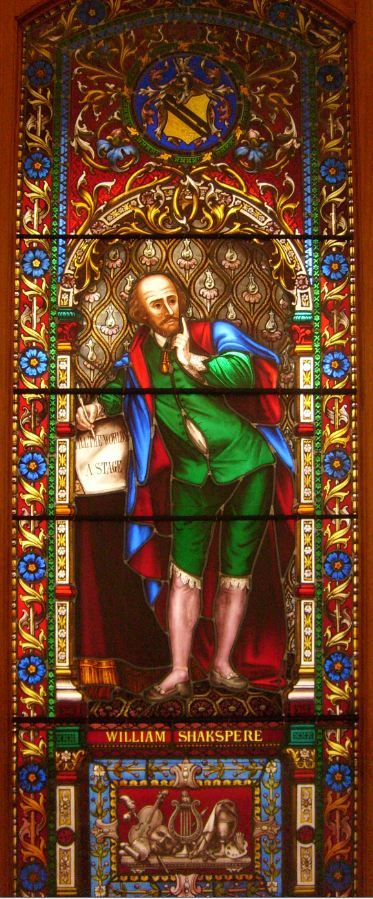
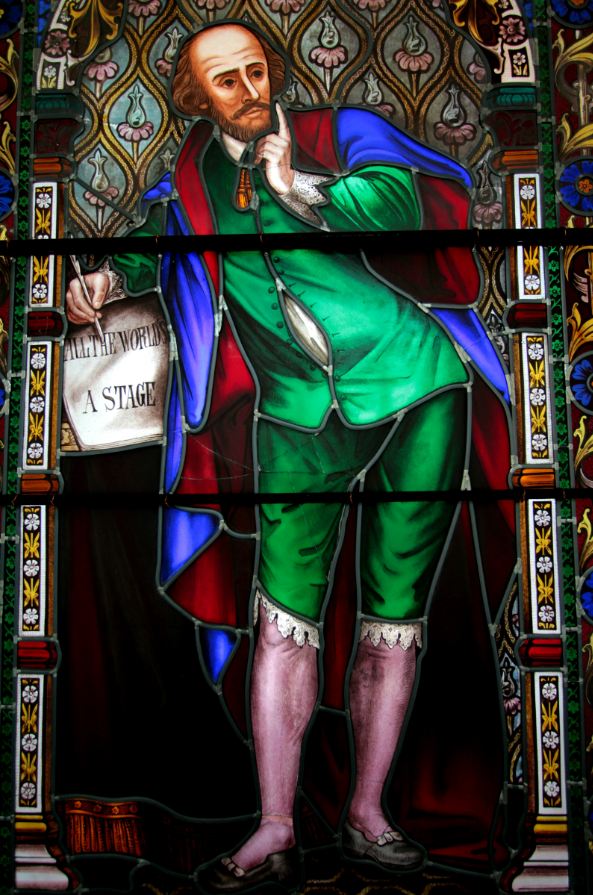
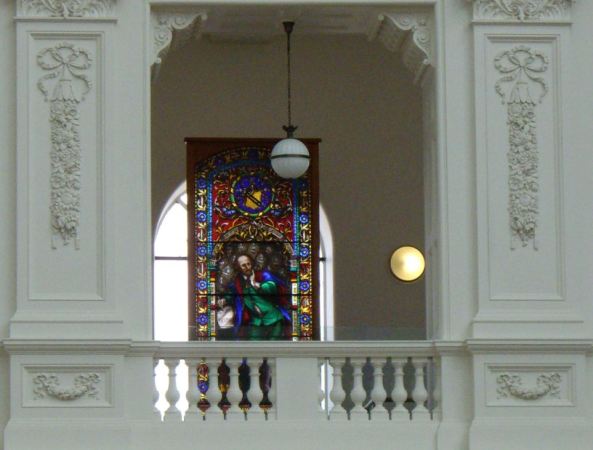
The history of one of Ferguson & Urie’s most famous stained glass windows can only be surmised by the following article:

The Portland Guardian and Normanby General Advertiser, Saturday 12th July 1862, page 2.

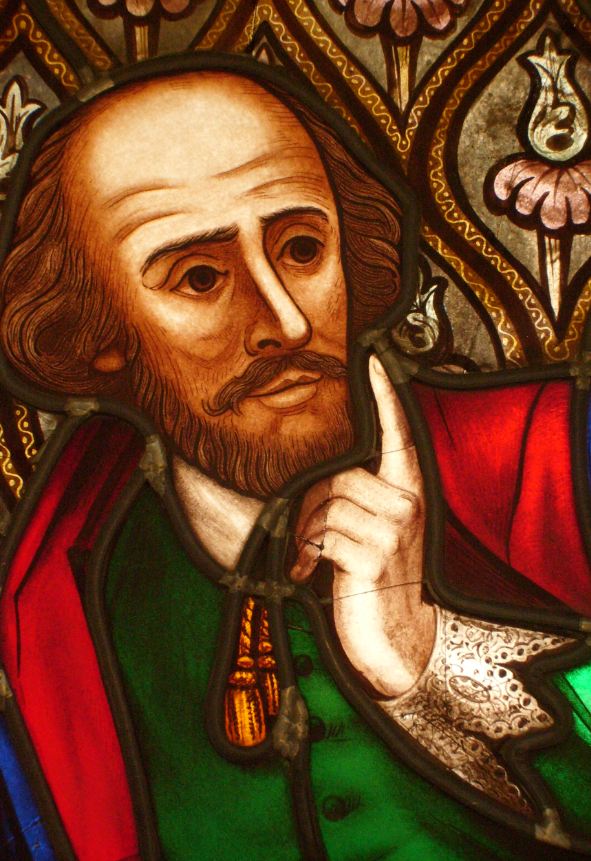
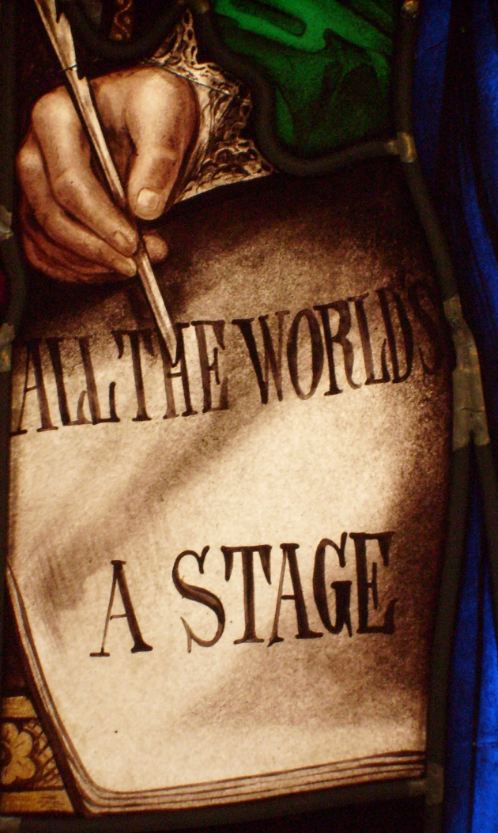
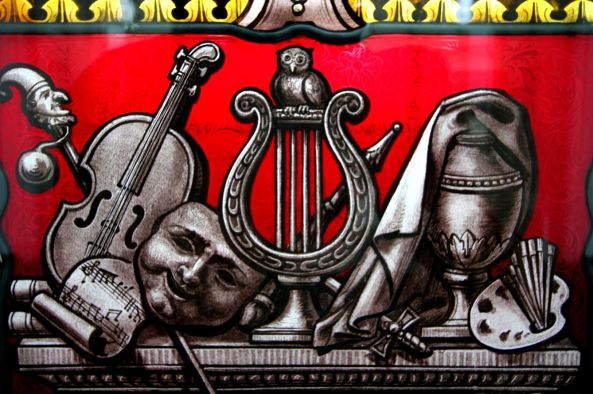
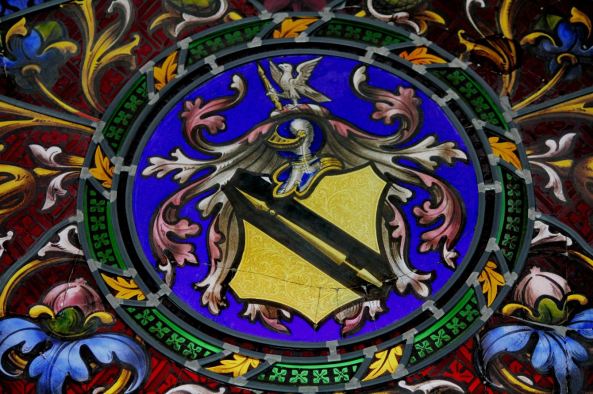
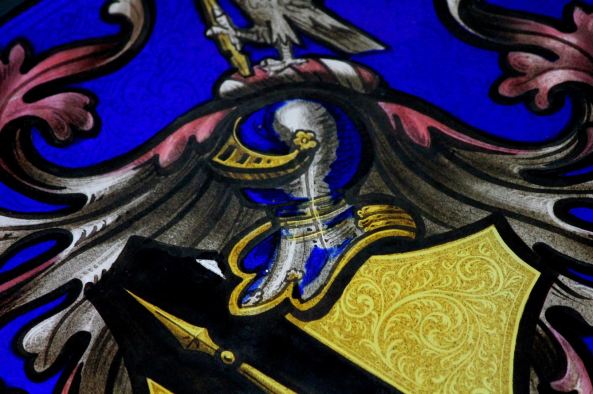
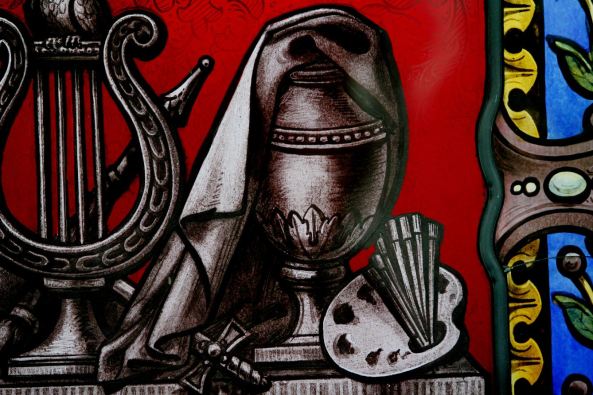
“I have just received per mail, a photograph of a splendid piece of work – in the shape of a magnificent stained glass window, it is equal to anything of the kind produced in the old country, and is a credit to the colony. This splendid piece of work has just been completed for the new theatre now about opening in Melbourne, and has been manufactured at the works of Messrs. Ferguson and Urie, of Curzon-street, Melbourne, its designers and the artists to whom it will testify for years to come; they have successfully carried out a specimen of the fine arts, such as could not be excelled in any part of the Queen’s dominions. It consists of three separate parts a central and two wings – the central part has a fine life sized portrait of the immortal Will. Shakespeare, surrounded by a border of scroll and arabesque work, with flowers intermixed of the richest colours; over the poets head is a coat of arms, in a kind of oriel – under his feet is a device, emblematic of the profession – a lyre, masque, &c, &c, this as well as the oriel is likewise surrounded by borderings of quaint and original design and the whole window had a border edged each side with a narrower one – of the most chaste and beautiful description. The Poet stands in a leaning attitude, pen in hand dressed in the handsome costume of Queen Elizabeth’s time. The two side departments each contain two full length portraits of the most prominent characters, such as the Jolly Old Knight, “Sir John Falstaff,” Macbeth’s guilty Queen and other two. The whole of this beautiful work is formed of Stained Glass of the richest transparent colours and is the first thing of the kind on so large a scale, executed in Victoria.”

The Shakespeare window is now on display at the top of the dome in the La Trobe reading room. It was restored by Geoffrey Wallace stained glass studio in 2005. Originally it included two narrow side windows devoted to the Shakespearean characters, Hamlet and Lady Macbeth and Beatrice but what became of those is unknown.

This slideshow requires JavaScript.

Related Posts:

05-07-1862 > 06-08-1862

18-11-1876: St. Stephen’s Anglican Church, Richmond, Melbourne, Victoria.


Short link to this page: http://wp.me/p28nLD-3d

© Copyright

05-07-1862: Coppin’s Apollo Music Hall Opening Night.

The Argus, Melbourne, Friday 4th July 1862, page 8.

“COPPIN’S APOLLO MUSIC HALL OPENING NIGHT, SATURDAY, JULY 5, 1862.”

 “The opening of the first music hall erected in the metropolis of Australia supplies a vacuity prejudicial to the musical tastes of the city. The present magnificent Building, erected by Mr. G. Conwell, under the supervision of P. Conlon, Esq, occupies 5,000 feet, is 22 feet high, and has been constructed with scientific regard to acoustics …”

…The Chaste Parisian Decorations are by Mr. J. Hennings and assistants. The Three Principal Chandeliers Are constructed with upwards of 3,600 pieces of crystal. The Splendid Mirrors contain upwards of 600 feet of plate glass. The Stained Glass Windows, By Messrs. Ferguson and Urie, are excellent specimens of colonial manufacture.”

Related Posts:

06-08-1862 > 12-07-1862  (photos)

External links:

Biography: George Selth Coppin 1819-1906


Short link to this page: https://wp.me/p28nLD-32

© Copyright

24-06-1862: St. Paul’s Anglican Church, Humfray St, Bakery Hill, Ballarat.

The Star, Ballarat, Tuesday 24th June 1862, page 2.

“Our churches naturally attract attention, less from an architectural point of view than from their social importance. The congregation of St. Paul’s Anglican Church has lately completed very considerable enlargements of that building, and mainly through the liberality of some of the wealthier members, furnished it with a square tower, which, though it does not itself command any very extensive view, forms a conspicuous and picturesque relief to the uniform want of elevation in the surrounding buildings. The building is of brick after a design by Mr Terry, in the latest period of pointed architecture. The decorations within have mostly been executed by Mr St.Quentin, and stained glass in the principal window has been presented by Mr. T. Robson, of Sturt street, and Messrs Ferguson and Urie, of Melbourne […].”

St Pauls Bakery Hill Ballarat

The Ferguson & Urie chancel window at St. Paul’s Anglican Church, Humfray Street Ballarat. Photo: Ray Brown 17 Mar 2011.

Related posts: 29-03-1862 > 14-04-1862 > 19-05-1862 > 04-06-1862 > 24-06-1862 > 15-07-1862 > 01-03-1863 > 07-08-1863