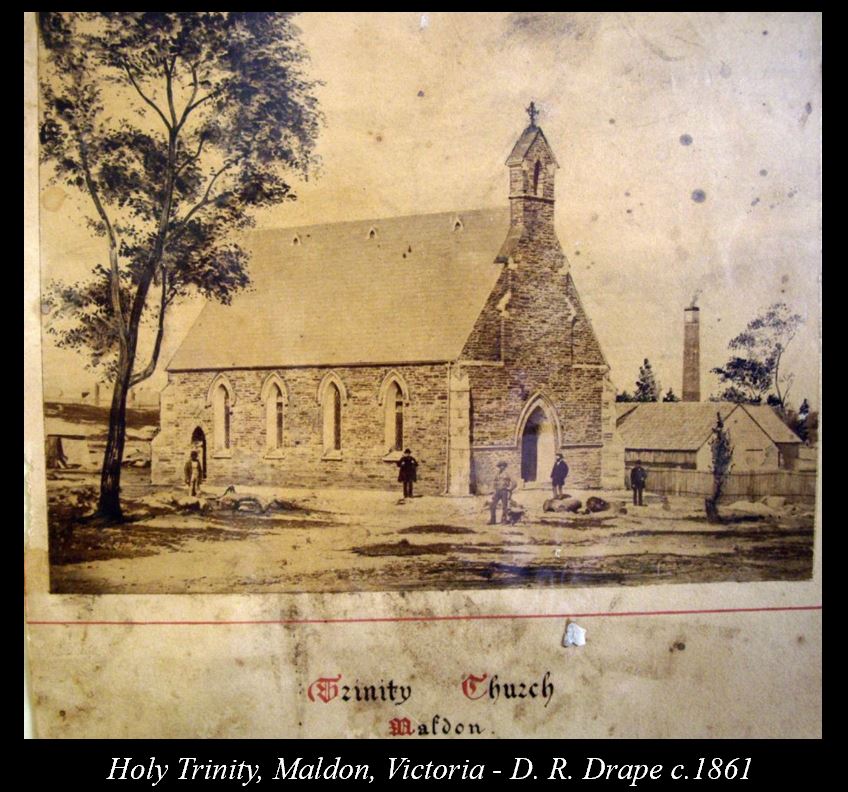
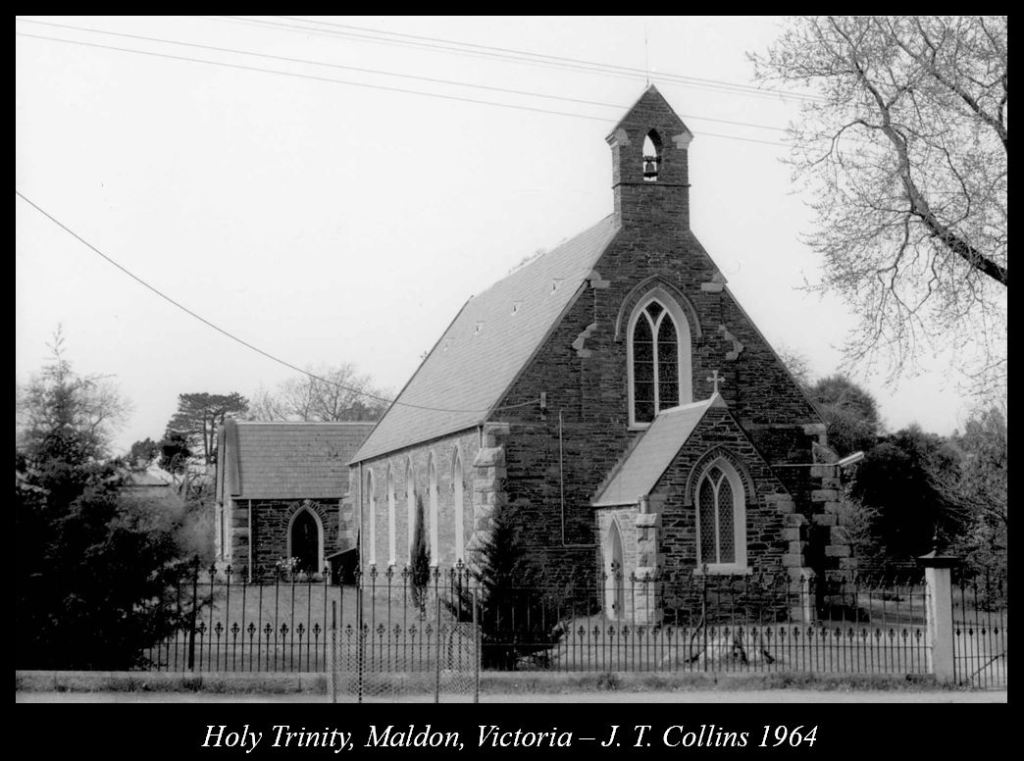
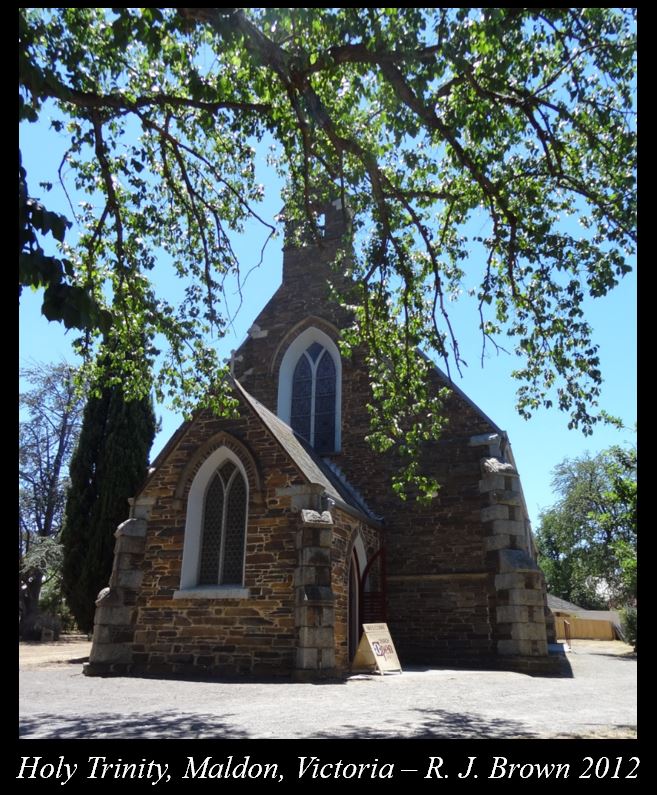
1863: Holy Trinity, Maldon, Victoria

#

The goldfield regions of Victoria are responsible for a lot of our pioneer history. A historic stained-glass window erected at Holy Trinity Anglican Church at Maldon in 1863 tells a significant part but in a historical perspective, a mere fraction of it. The window is now more than a century and a half old, it’s 157 as of 2020, the year of the worldwide COVID-19 virus pandemic.

On the third of May 1861, the Tarrangower Times reported that the £750 tender of Hornsby & Briscoe was accepted for the construction of Holy Trinity Church at Maldon and would be built to the designs of David Relph Drape.[1]

The foundation stone was laid on Wednesday 19th June 1861 by Archdeacon Crawford of Castlemaine [2] and it opened in October of the same year.

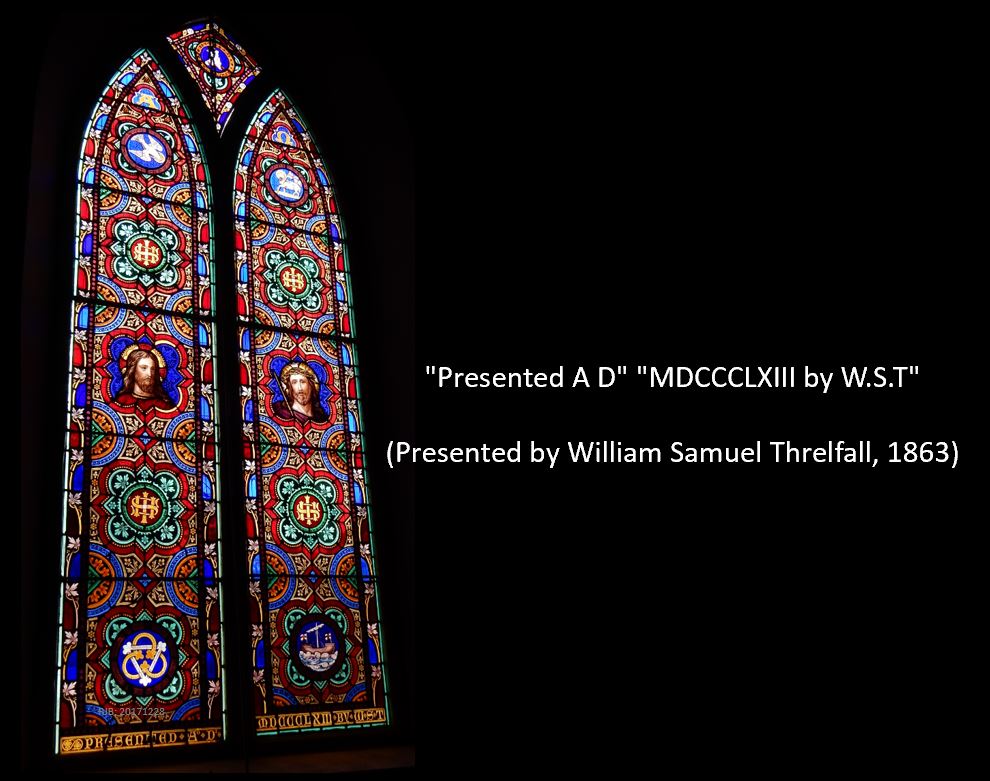
In late 1863, a local mining investor from Maldon named William Samuel Threlfall donated a two-light stained-glass window for the west end of Holy Trinity Church. Given that architect of Holy Trinity David Relph Drape was primarily a stained-glass artist by trade you could be forgiven for thinking that he would have some input in the design of the window or even some hands-on work with it. This may not have been the case.
Five years earlier, in 1858, Drape accepted an offer from James Ferguson of the Ferguson & Urie company of North Melbourne to emigrate to Australia from Carlisle, England, and be the company’s stained-glass artist in their new venture producing locally-made Colonial stained-glass windows. He arrived aboard the ship ‘Morning Light’ on the 20th September 1858 only to find that Ferguson & Urie’s stained-glass workshop in Curzon Street North Melbourne had not been built and there was no employment for him, so he decided to head for the goldfields town of Maldon in Central Victoria.

Why Drape chose Maldon specifically is not known, but there was plenty of demand for his skills there. Back in Carlisle Drape had been well acquainted with the Selby family and coincidentally, John Selby, closely followed by his sister Jane, had migrated to Australia earlier and settled at nearby Castlemaine eighteen kilometers southeast of Maldon. It’s a fair assumption that Drape’s heartstrings for Jane were the reason for many of his trips to Castlemaine, often by foot.[3] He married Jane Selby at the Congregational Church in Melbourne in 1864.

Drape became well known in Maldon in many different pursuits. He was the architect of many local Maldon buildings and his other skills included, draftsmanship, art, painting, illuminated testimonials, tombstone, and memorial tablets. He was also a board member of the Concord Quartz Mining company. There is no record of him designing or fabricating stained-glass windows during his time at Maldon.[4] 

Coincidentally, in April 1861 a Scottish stained-glass artist named John Lamb Lyon arrived in Maldon with his wife Elizabeth. Why they chose Maldon is more obvious as John’s parents James and Janet had migrated to Australia earlier and established themselves as Maldon storekeepers and contractors for the local postal service.

A little over four months after their arrival in Maldon, John was in the process of submitting a design for a stained-glass window for the 1861 Melbourne Industrial Exhibition:

“Works of Art.- Mr John Lyon, lately arrived from England, on a visit to his father, a well-known old resident of this town, is now engaged on an elaborate design for an “Early English” stained glass window. It is intended for the forthcoming Exhibition, and space has been allotted him for that purpose. We consider Mr. Lyon a gentleman of great promise and sterling ability, and we cannot but hope that his work will attract such attention in Melbourne that he will be enabled to pursue his beautiful art in the colony with advantage to himself and the public. We are informed by gentlemen, we believe competent to judge that there is no Ecclesiastical glass painter of equal talent in the colony, at least not publicly known. Architects who in carrying out their designs have felt the want of such decorations will now have an opportunity of judging whether the talent of Mr. Lyon will fill the vacuum” [5]

I suspect that his stained-glass window design may have ended up being used as the design for the two-light window at St Margaret’s Church at Eltham in Nov/Dec 1861. That window is extant and currently the oldest Ferguson & Urie stained-glass window I have found to date. If a linotype or sketch of Lyon’s window for the 1861 exhibition were ever to be found it might solve or deny the mystery.

It would be incredulous not to think that Drape and Lyon did not become acquainted with each other in Maldon. Two stained-glass artists with similar tastes and artistic abilities in the medieval stained-glass craft in a small gold mining town in Australia is an extraordinary coincidence.

By late 1861 Lyon had joined the Ferguson & Urie stained glass company at North Melbourne and started the production of stained-glass from their new workshop in Curzon Street.

Drape had left Maldon by the end of October 1863 and started work alongside Lyon at Ferguson & Urie’s on the precise date of 8th November[6].

In late 1863 the stained-glass window for Holly Trinity had been completed and erected high in the liturgical west end. The exact date is not known. I can only broadly bracket it down to the latter half of 1863.  The first mention of it is in early February 1864. One thing is certain, the window had to have been fabricated at the new Ferguson & Urie workshop in Curzon Street North Melbourne. Ferguson & Urie had the only known stained-glass workshop in Victoria at the time. Lyon was quoted for an interview for the Australian Decorator and Painter in 1909 that their inception was primitive:

“In 1861, Mr. Lyon joined the firm of Ferguson and Urie, Melbourne. Their commencement was on a very primitive scale. They made their own colours and acid, and fired the glass in a colonial camp oven. They, however, soon got properly going, and produced good work under the firm name of Ferguson, Urie and Lyon.” [7][8]

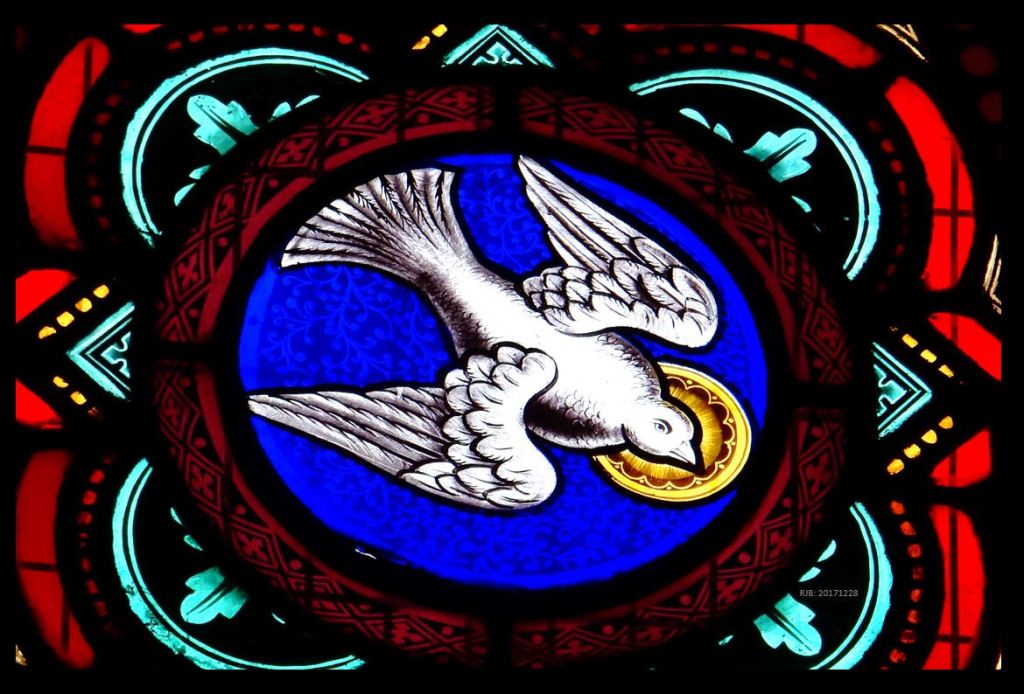
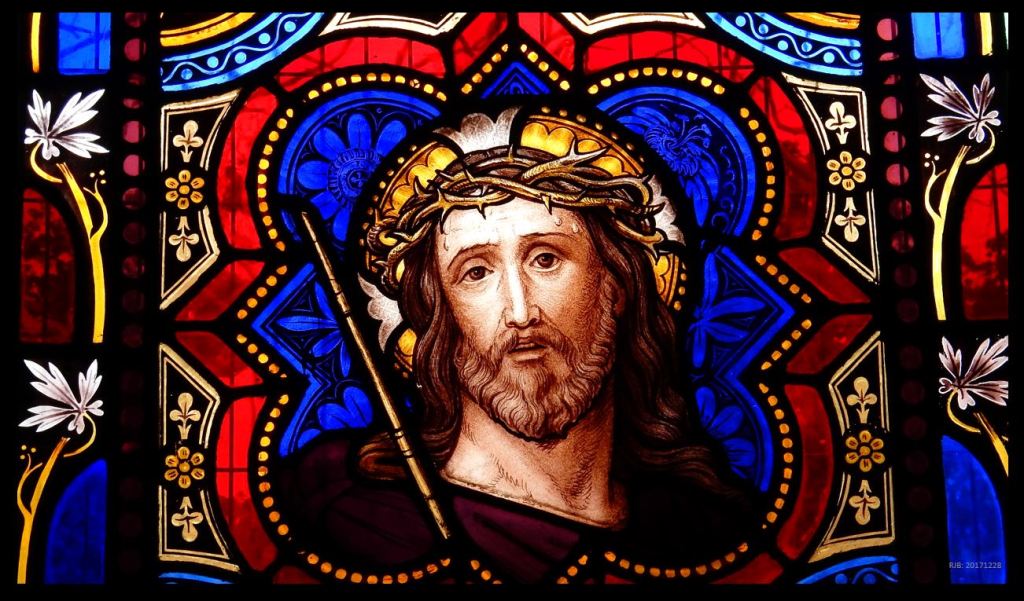
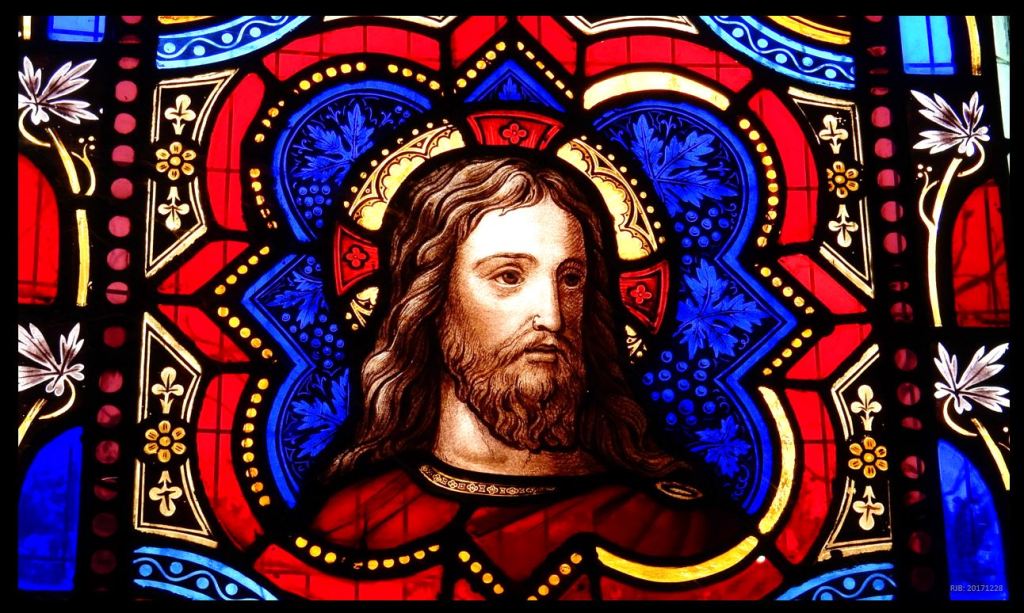
The Maldon window is a two-light in the English style and has the image of  Jesus in the centre of each light. It certainly looks like Lyon’s style and the overall arrangement bears similarities to his other windows at Holy Trinity, Kew, and Christ Church, Kilmore. An article published in the Tarrangower Times in February 1864 states the Maldon window is his work. Whether Drape had any input or hands-on work with Lyon on the window may never be known.

“A great many of our readers will no doubt have observed the very handsome painted window in Trinity Church, presented by W. Threlfall Esq. As regards its intrinsic beauty, and its value as an ornament to what was already considered (we quote the Bishop of Melbourne’s remark, on the occasion of his last visit to Maldon) one of the prettiest little churches out of Melbourne; there can but be one opinion, but perhaps it is not so generally known that this window, reflecting as much credit on the liberal and public spirited donor, may be considered, as in some degree, the work of a Maldon artist; it having been designed, and fabricated, by Mr J. L. Lyon, the son of our respected fellow townsman Mr Lyon, of Main Street”[9]
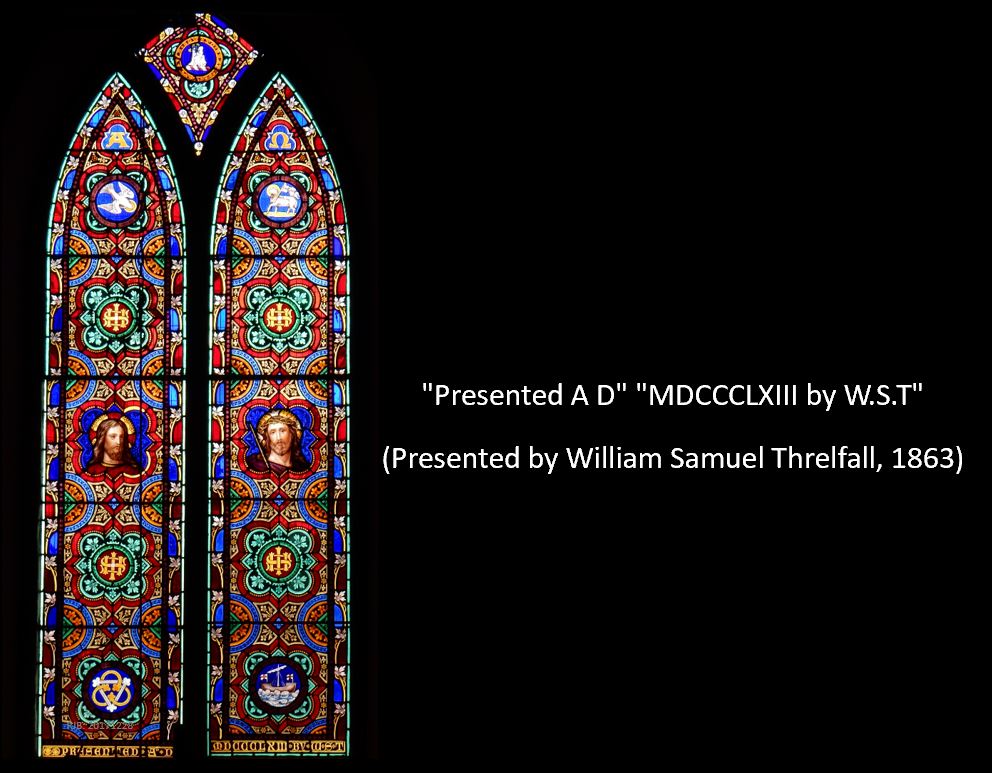
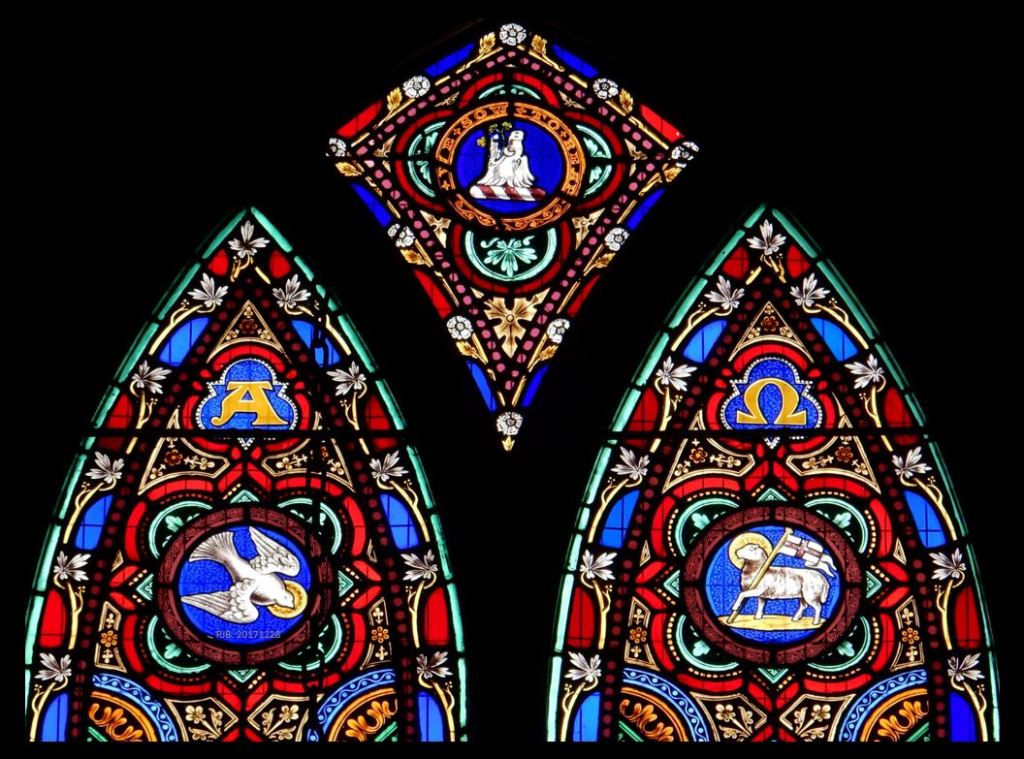
 

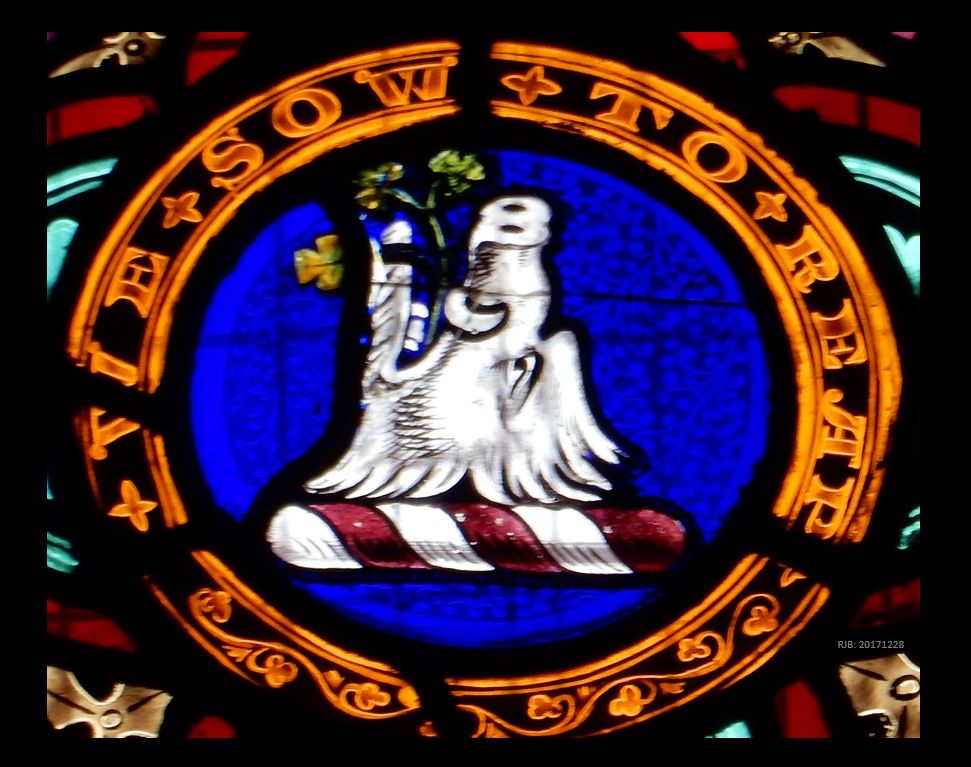
A perplexing thing about the design of the window is a family crest depicting a boar’s head in the apex, presumably that of the donor William Samuel Threlfall. The crest appears above two images of Christ, the Holy Dove and the Lamb of God. The text at the base reads “Presented A.D MDCCCLXIII by W.S.T” (William Samuel Threlfall 1863). It’s not unheard of to see a family crest appear at the top of an ecclesiastical church window, but above the image of Christ or his symbology is extremely rare. Similar instances I have come across during research indicate that where the donor has elevated him/herself above Christ in an ecclesiastical window, it’s usually been met with a very harsh response by the congregation or church committee. The windows were usually forced to be re-made or modified. In extreme cases, a window was summarily sent back to where it came from.

Who was William Samuel Threlfall?

Threlfall was a native of Lancashire, England, and was a small-time mining investor in the Maldon district who had shares in failed gold mining ventures. Many articles of the time paint him as often owing money.

On the 2nd June 1864 at the age of 65, he married the widow Mary Ann Spence[10] at Christ Church, Castlemaine[11]. By November of the following year, he and his wife have disappeared from the Maldon area and dead letters addressed to his wife Mary begin accumulating at the Emerald Hill (South Melbourne) Post Office[12]. Another advertisement in late November 1865 appeals to “Mr. Threlfall, late of Maldon, will put himself (directly or indirectly) in communication with the advertiser, he can receive some beneficial information”[13]. In May 1867 the court ruled that in Threlfall’s mysterious absence his one-eighth share in a quartz-claim at Maldon would be forfeited in favor of the claimants. He is not heard from again.

Related posts:

Biography: John Lamb Lyon (1835-1916)

Biography: David Relph Drape (1821-1882)

Footnotes:

[1] Tarrangower Times, Maldon, Vic, Friday 3rd May 1861, page 4.

[2] Tarrangower Times, Maldon, Vic, Friday 21st June 1861, page 2.

[3] David Relph Drape, Architect, and Glass Stainer; E.M. Bradshaw 1970; Unpublished Manuscript, State Library of Victoria.

[4] Biography: David Relph Drape (1821-1882)

[5] Tarrangower Times, Maldon, Vic, Friday 30th August 1861, page 3.

[6] David Relph Drape, Architect, and Glass Stainer; E.M. Bradshaw 1970; Unpublished Manuscript, State Library of Victoria.

[7] The Australasian Decorator and Painter, August 1st, 1909.

[8] The partnership name of “Ferguson, Urie, and Lyon” did not commence until October 1866.

[9] Tarrangower Times, Maldon, Vic, Tuesday 2nd February 1864, page 2.

[10]  Mount Alexander Mail, Vic, Friday 3rd June 1864, page 2.

[11] Victorian Birth Deaths & Marriages, 398/1864, Christ Church Castlemaine.

[12] The Argus, Melbourne, Vic, Monday 13th November 1865, page 1.

[13] The Argus, Melbourne, Vic, Monday 20th November 1865, page 1.


Short link to this page: https://wp.me/p28nLD-31h
© Copyright

1879: Holy Trinity, East Melbourne, Victoria.

The Clarke’s were wealthy Colonial pastoralists who were well acquainted with the Ferguson & Urie stained glass company’s workmanship.

In the ten year period between 1875 and 1885 William and Joseph Clarke engaged the company a number of times to create ecclesiastical windows, dedicated to family members and friends, as well as secular windows to decorate their magnificent mansions at Sunbury and Toorak.

In 1875-76, Sir William John Clarke commissioned Ferguson & Urie to create the great cycle of secular stained glass windows for his mansion “Rupertswood” at Sunbury, North East of Melbourne. In 1880 he again engaged the company for a three light memorial window to be dedicated to his infant daughter Agnes for the chancel of St Mary’s Anglican Church at Sunbury. Circa 1884, a two light window in the liturgical west wall of the same church was dedicated to his friend, the politician J. G. Francis. His brother, Joseph Clarke, also commissioned Ferguson & Urie to create the windows for his mansion “Mandeville Hall” at Toorak circa 1876.

In 1878 William and Joseph’s mother Elizabeth had died and they engaged Ferguson & Urie in late 1879 to create her memorial window for the new chancel of Holy Trinity Church at East Melbourne.

Unlike all the other historic stained glass windows the Clarke brothers had commissioned Ferguson & Urie to create, this one would only survive a quarter of a century.

Photos taken 5th November 2012. Other historic images are from the State Library of Victoria collections and National Library.

This slideshow requires JavaScript.

[View larger images]

In 1864 Trinity Church East Melbourne was erected of bluestone on the George Street corner of the present site at 193 Hotham Street.

This site had been originally designated for a Cathedral, but Holy Trinity was erected on it with the intention that it was later to be converted to the Cathedral library or chapter house[1].

Th Church was opened on Sunday 20th November 1864[2] and on the day before Christmas of 1864 the Melbourne tabloids reported:

The Australian News for Home Readers, Vic, Saturday 24th December 1864, p 7.

“TRINITY CHURCH, EAST MELBOURNE.

“This building, which is at present used for the purposes of Divine services by the parishioners of East Melbourne, will ultimately constitute the chapter house and library of the Melbourne Cathedral, being built upon the reserve set apart for that purpose, and so constructed as to harmonise with the whole structure when completed. It was opened a short time ago by the Bishop of Melbourne, as a temporary place of worship, and named Trinity Church. The officiating minister is the Rev. H. N. Wollaston, who has a large and increasing congregation. The building is constructed in a substantial manner, the walls being of bluestone, and the windows of Geelong freestone. The roof is supported by strong open woodwork, embellished with ornamental carving, which gives to the interior of the church a bold and lofty appearance. The dimensions of the building are considerable, its length internally being 88 feet, and its width 38 feet, and it will furnish accommodation for about four hundred persons.” [3]

At this point there was no mention of any decorative stained glass windows erected in the church, but thirteen years later, extensions were being made by the addition of a new chancel. The contractor for these extensions was Thomas Dalley[4] and was erected to the designs of architects Terry & Oakden at a cost of £1200. During these alterations, the Ferguson & Urie stained glass company erected the new chancel window to the memory of “Mrs William John Turner Clarke”, (Elizabeth ‘Eliza’, nee Dowling[5]), the mother of William and Joseph Clarke.

On the 3rd of December 1879 the “Church of England Messenger” made specific mention of the Ferguson & Urie company erecting the window in the chancel:-

“MELBOURNE: TRINITY.- The new chancel which is being added to the eastern end of Trinity Church is now almost completed and is expected to be out of the contractors hands at the close of the present month. It is 32ft. long by 22ft. wide, the walls being of stone, and in keeping with the design of the old building. On the eastern wall there is a five light window, with decorated tracery, executed in Waurn Ponds freestone, the glass for which is to be of a handsomely-coloured character, and will be fitted in by Messrs. Ferguson and Urie. The arch of the chancel is pointed, and of the Gothic order, with corbels of red granite and freestone. At the south side provision has been made for an organ chamber, which, if found necessary, can be erected at any future time. Two porches have also been added at the north and south entrances of the building, each of them being 11ft. square. Messrs. Terry and Oakden were architects, and Mr. T. Dalley the contractor. The whole of the improvements have been effected at a cost of £1200”.[6]

In late September the Argus newspaper reported that William and Joseph Clarke were the donors of the window in memory of their late mother:-

The Argus, Melbourne, Vic, Friday 26th September 1879, page5

“A large congregation assembled at Trinity Church, East Melbourne, last evening, to witness the opening of the new chancel recently added to the church. The Right Rev. the Bishop of Melbourne preached an eloquent sermon in celebration of the opening, taking for his text Matt, i, 21. The chancel, which is constructed of bluestone, is situated at the eastern end of the building and was erected at a cost of £1,200. The interior measures 30ft. by 22ft., and has been handsomely fitted up with communion table and railing. A large memorial window has been placed in the chancel by Messrs W. J. and Joseph Clarke, in memory of their deceased mother, Mrs. W. J. T. Clarke[7]. The work, which has been carried out under the supervision of Messrs Terry and Oakden architects, is a great improvement to the interior of the church, as well as adding materially to its outward appearance. During the service a sum of £18 was collected, which will be devoted to the chancel fund.”

Twenty six years later, on New Years day in 1905, Holy Trinity was completely gutted by fire, leaving only the shell its four walls.

None of the historic stained glass windows by Ferguson & Urie survived:-

Bendigo Advertiser, Vic, Tuesday 3rd January 1905, page 3.

“THE FIRE AT HOLY TRINITY CHURCH.
Melbourne
, 2nd January.

The origin of the fire which occurred at Holy Trinity Church, East Melbourne, yesterday afternoon has not been, and apparently is not likely to be, discovered. Only the four walls of the church are now standing, all the woodwork, which was very old, having been burnt away. The most plausible theory as to the cause of the outbreak is that a match was carelessly dropped on a pile of rubbish under the west gallery. The members of the congregation are almost unanimously of the opinion that the church should be rebuilt, and very probably large contributions will be forthcoming, in addition to the £2000 which will be received from the insurance offices.”

The Holy Trinity congregation wasted no time in the erection of a new church. It was subsequently built on the opposite end of the block where the old church stood. It was opened by the Archbishop of Melbourne on Saturday 28th April 1906 and consecrated the following year in October 1907:-

The Australasian, Melbourne, Vic, Saturday 28th April 1906, page 48.

“The Incumbent (Rev. Mr. Newport White) and vestry of Holy Trinity Church, East Melbourne, have issued invitations, to the congregation and their friends, for the opening of the new church, corner of Clarendon and Hotham streets, replacing the building destroyed by fire on New Year’s Day, 1905. The opening ceremony will be performed by the Archbishop of Melbourne to-day (April 28), at a quarter to 3 p.m. After the ceremony, the adjoining school-hall will be opened, for a supplementary sale of gifts and refreshments. On Sunday, 29th inst., there will be special services in the church, and the one which is to begin at half-past 3 p.m. will be conducted by the Ven. Archdeacon Crossley.”

The current Holy Trinity church now contains figurative stained glass windows by Alan Sumner in the nave and Derek Pearse in the liturgical east end. The most recent window to be erected was created by the Geoffrey Wallace stained glass studio at Caulfield and was designed in the Alan Sumner style to complement the other Sumner windows in the nave.

External Links:

Flickr photo stream for Holy Trinity, East Melbourne. This photo collection includes detailed images for all the current windows.

Footnotes:

[1] The Argus, Melbourne, Vic, Tuesday 19th January 1864, page 7.

[2] The Argus, Melbourne, Vic, Saturday 19th November 1864, page 5.

[3] The Australian News for Home Readers, Vic, Saturday 24th December 1864, p 7.

[4] The Argus, Melbourne, Vic, Monday 16th June 1879, page 5.

[5] “Elizabeth ‘Eliza’, née Dowling (1800-1878), wife of William John Turner Clarke (1805-1874)

[6] The Church of England Messenger, 3rd September 1879.

[7] “Elizabeth ‘Eliza’, née Dowling (1800-1878), wife of William John Turner Clarke (1805-1874)


Short link to this page: http://wp.me/p28nLD-2Ay

© Copyright

19-09-1874: Holy Trinity Church of England, Williamstown, Victoria.

The first Holy Trinity Church at Williamstown was a prefabricated iron building known as an “Iron Pot” (freezing in winter and boiling in summer). There were many of these “Iron Pot” churches imported from England and erected throughout the colony and this one was erected in Nelsons Place in Williamstown. The Rev. George Wilkinson was obviously not happy with this poor excuse for the house of the lord and began the movement to have a respectful stone church erected for his congregation in 1859. The foundation stone for the new Leonard Terry designed church was eventually laid on the 11th of February 1871 by Bishop Charles Perry and was opened on the 7th October 1874. The “pretty chancel window” described as being made by Ferguson & Urie, circa 1874, no longer exists and was replaced by the Charlotte & William Holten memorial window circa 1941. According to the Holy Trinity’s newsletter (The Pilot, Vol 2, Issue 3, April 2012, page 4): “The artist for this window is unknown. We do know it was made in England and brought to Williamstown by Mrs Dorothy Raverty 2nd, step mother of Reverend J. Raverty who had it installed in Memory of her parents.”

This newsletter item is not correct. The Holten memorial window was actually made by the Brooks, Robinson & Co stained glass company of Melbourne, who also made other windows in Holy Trinity.

All the original windows in the nave of Holy Trinity have also been replaced over the course of a century and are made by the artists and studios of William Montgomery, Napier Waller, Brooks Robinson & Co, and Alan Sumner.

The west four light window, with rose window above, and those in the clerestory, with the simple coloured borders and plain diamond quarries, are very likely be some of the original circa 1874 installations by Ferguson & Urie of North Melbourne.

Photos taken: 11th September 2010.

This slideshow requires JavaScript.

Williamstown Chronicle, Vic, Saturday 19th September 1874, page 2.

“THE NEW CHURCH OF ENGLAND.- The new place of worship which the adherents of the Church of England have just erected in Williamstown is one of the most handsome and commodious churches in the colony. With the exception of the tower and spire the building is now complete, and the conspicuous position it occupies makes it a prominent and pleasing feature in the town as seen from the Bay. The cost, as it stands, is £5000, and the erection of such a noble structure speaks well for the energy and liberality of the Episcopalians in our comparatively small parish, particularly as the new church when entered upon will be but slightly involved financially. The church, including the chancel, is 110 feet in length, and is from a design by Mr. Leonard terry, in the gothic style, with nave and aisles of lofty proportions. The material employed is bluestone, with freestone dressings. The interior has a very handsome appearance, which is heightened by the tone of the glazing, the body colour being amber with varicoloured margins. A pretty chancel window, made by Ferguson and Urie, imparts to that portion of the interior a very pleasing effect, which is continued in the rich yet simple decorations of the ceiling. The seating, to which the greatest attention has been given, is very convenient and comfortable. The material used is lightly stained Oregon pine. A lectern, from one of the best medieval workers in England, and the gift of Sir George Verdon, will shortly be added, and from the known liberality of the donor and the high reputation of the makers, will no doubt prove a further ornament. The substitution of a nice front picket fence for the old palings which have so long done duty has also contributed to the fine appearance of the church. The new place of worship will be opened on Friday, the 2nd prox, by the rev. pastor, Mr. Wilkinson.”

Also See:

Holy Trinity web site.

Flickr Photo album of Holy Trinity’s stained glass.

08-06-1881: Holy Trinity Church, Kew, Victoria.

The Australasian Sketcher with Pen and Pencil, Saturday 8th June 1881, page 198.

“INTERIOR OF HOLY TRINITY CHURCH, KEW”.

“The first stone of this church was laid about 20 years ago. It was originally designed to accommodate 400 persons, and then consisted of a nave, a small apsidal chancel, a robing-room and tower (which is still uncompleted), and a south porch. The church is built of bluestone, with white stone dressings. The style selected is early English, about the turn of the 13th century. The nave is covered with a hammer-beam roof having a span of 30ft. 6in. Owing to the increase in the population of the district, and the consequent demand for additional sittings (a demand that was not foreseen when the church was originally designed) it was determined by the church committee abut eight years ago to enlarge the church so as to accommodate 200 additional persons, and after due deliberation it was decided to obtain this accommodation by taking down the old chancel and a portion of the nave, and adding two transepts, a chancel large enough to accommodate the choir and organ chamber on the south side of the chancel, and a vestry on the opposite side. The plan of the building, therefore, as now completed, is cruciform, of which the following are the principal dimensions:- Chancel, 24ft. long by 21ft. wide; nave, 91ft. 6in. long by 36ft. 6in. wide; transepts, each 22ft. long by 28ft. wide. The pulpit, reading desk, choir seats, and pews throughout are all of cedar. In the west end is a fine stained glass memorial window to the late Prince Consort, executed by Messrs. Ferguson and Urie. The internal plastering, carving of the corbels, and the erection of an additional vestry have just been completed. A new organ has also recently been erected at a cost of about £500. The altar is furnished with a handsome frontal, presented by the ladies of the congregation, embroidered in gold and coloured silks by Mrs. Samson, of East Melbourne. The belfry chamber of tower, and the spire (which would complete the church), are not to be carried out at present. The plans, &c., have been furnished by Mr. Barret, of the P.W.D., who made the original designs for the building. The incumbent of he church is the Rev. Canon Vance.”

The Prince Consort (west) window was restored in 2009. The original three light chancel window by Ferguson and Urie now resides in the south transept and has the makers name “Ferguson & Urie” in the lower right corner.

The photos were taken 02/01/2011. Included in the photos is one of the original sketch design for the chancel window circa April 1863.

This slideshow requires JavaScript.

Related posts: 03-04-1863 > 24-03-1864 > 29-04-1864 > 13-08-1867

06-01-1876: Holy Trinity (Greek Orthodox), Hobart, Tasmania.

The Mercury Hobart, Tasmania, Thursday 6th January 1876, page 2.
The Mercury Hobart, Tasmania, Monday 24th January 1876, page 2s.

“MEMORIAL WINDOW – A beautiful and richly coloured window (says the Church News) has lately been placed in Holy Trinity Church, Hobart Town, by a large number of the parishioners and friends of the Rev. Canon Davenport as a memorial of his eldest son. It is the work of Messrs. Ferguson and Urie, Melbourne, and the chief design is a Cross with the words, “Thou art my hope, O God. Jesu, Mercy”. The window also bears the following inscription:- “WALTER CHARLES DAVENPORT. Died 31st March, 1875. Aged 22 years. A tribute from Friends”. This mark of sympathy is deeply valued by Cannon Davenport and his family.”

Holy Trinity was designed in the Gothic Style by the convict architect James Blackburn. The Governor, Sir John Franklin, laid the foundation stone in October 1841 and the church was consecrated on the 27th December 1849.

Despite many attempts by the Anglican diocese to retain the church, it was found uneconomical  to pay the four million ongoing repair bill and it was eventually decided to sell it to the Greek Orthodox Church in 2009.

Apart from the Davenport memorial window, there are two other Ferguson & Urie windows in the church. The three windows are:

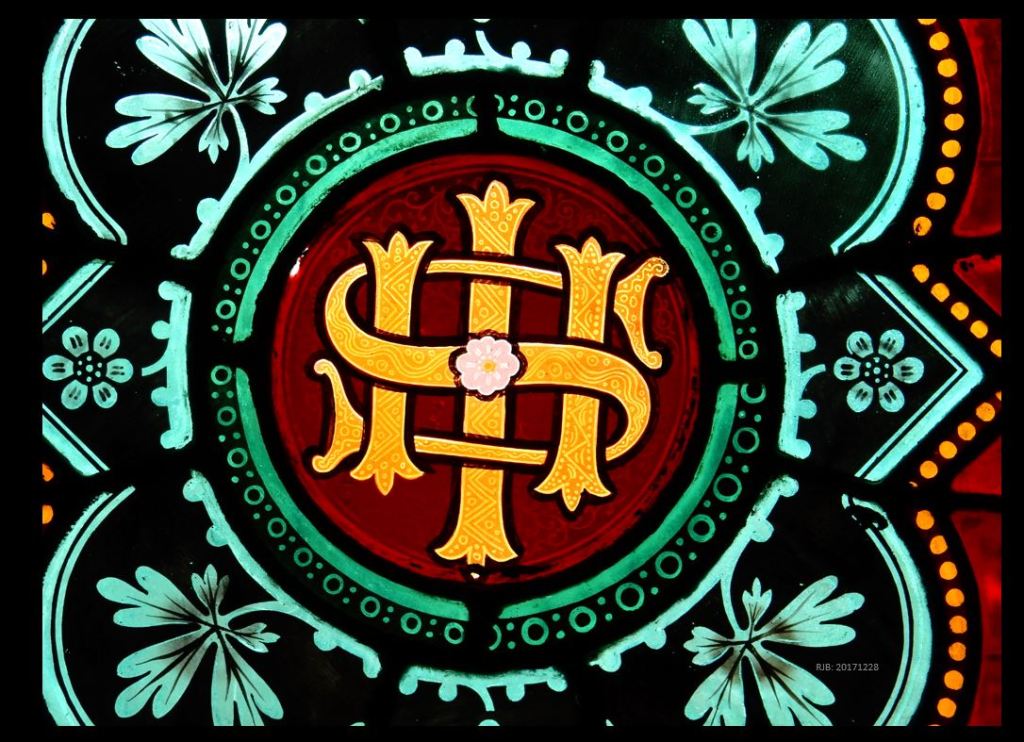
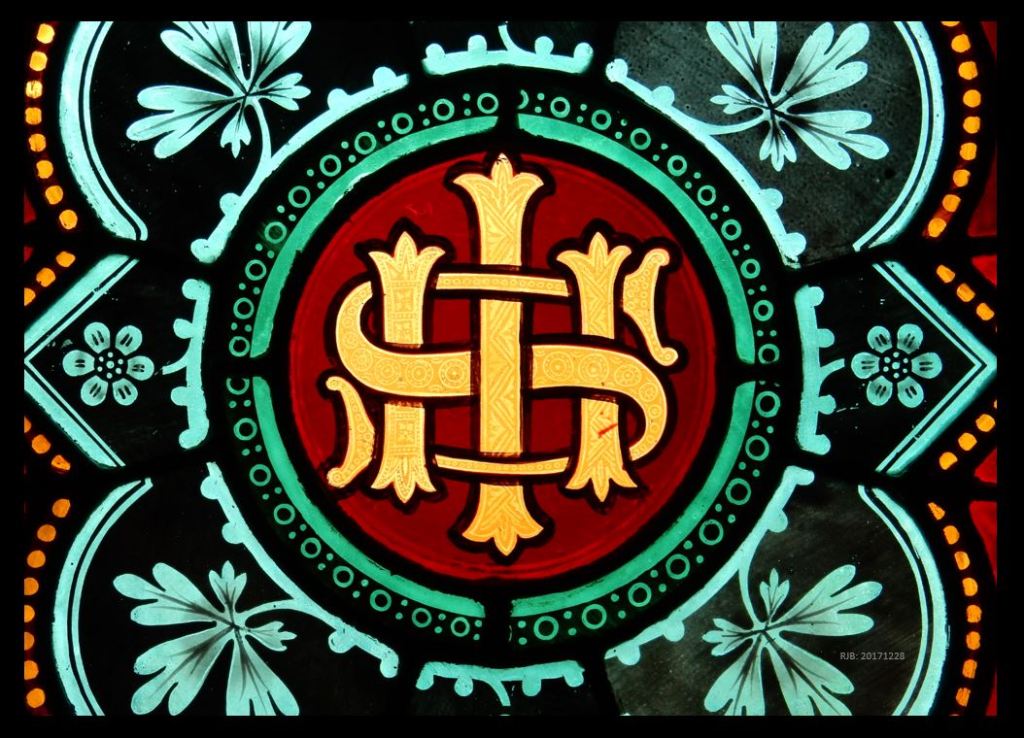
1. The Davenport memorial window has a blue cross with IHS above, floral and geometric designs with text : “THOU ART MY HOPE O GOD, JESU MERCY”, “WALTER CHARLES DAVENPORT. DIED 31st MARCH 1875 AGED 22 YEARS. A TRIBUTE FROM FRIENDS.”

2. Christ carrying the cross with text: “THE LORD HATH LAID ON HIM THE INIQUITY OF US ALL – ISAIAH 53 VER 6”.

3. A depiction of the Suffer little Children with the text, “OF SUCH IS THE KINGDOM OF HEAVEN”. The memorial text reads: “TO THE GLORY OF GOD AND IN MEMORY OF SARAH NOWELL , DIED 29th NOV 1880”

All three windows, with closeup detail, are depicted in the slideshow:

This slideshow requires JavaScript.

External links:

Short link to this page: http://wp.me/p28nLD-oL

22-05-1874: Holy Trinity Catholic Church, Westbury, Tasmania

The Mercury, Hobart, Tasmania, Friday 22nd May 1874, page 2.

“OPENING CEREMONIES AT THE CHURCH OF HOLY TRINITY, WESTBURY”

“The Nave is lighted by a magnificent Oriel window in the centre which is a representation of the Divine Lord, surrounded by a representation of the Pelican in the wilderness, the cross and Heart, the cross with the hammer and nails, the cross with the circle of thorns, with I.N.R.I; a representation of the undivided garment of Christ, the lamp of faith, and the lamb. This window was executed by Messrs Ferguson & Urie. It was the gift of Daniel Burke Esq the Warden of Westbury […]”.

“[…] Two stained glass windows with two lights being St Patrick and St Bridget and the other, The Annunciation – a gift from Mrs William Smith of Westbury and the Rev W.J Dunn vicar general. These windows were executed by Ferguson & Urie.[…]”

Photos taken 11th October 2010.

This slideshow requires JavaScript.

See post 21-05-1874 for additional article about the Westbury windows.

Related posts:

21-05-1874 > 22-05-1874


21-05-1874: Holy Trinity Catholic Church, Westbury, Tasmania.

Launceston Examiner, Tasmania, Thursday 21st May 1874, page 3.

 “CHURCH OF THE HOLY TRINITY, WESTBURY”.

 “OPENING CEREMONIES. WEDNESDAY, MAY 20”.

 “…The east end window is the gift of Mr John barber and family; it represents the nativity, the Crucifixion, and the Resurrection, with artistically enriched borders; the colors are exquisitely beautiful. This presentation window came from the establishment of Messrs Couttes and Sons, London, and is an admirable work of art. Another window is of stained glass in two lights each, one representing St. Patrick and St. Bridget, the patron saints of Ireland, the gift of Mr William Smith; and the other “The Annunciation,” the gift of the Very Rev. Vicar-General Dunne. A third window, also of stained glass, is the gift of Mr Dignam, formerly of Westbury, and represents “father, Son, and Holy Ghost,” the church being dedicated to the Holy Trinity. There are also presentation windows by Mr D. Burke, Churchwarden of the church and Warden of the Municipality of Westbury, emblematic of the Crucifixion; and another from funds collected by Mrs Steward, representing Faith, Hope, and Charity. All the stained glass windows, with the exception of the barber presentation at the east end, are the artistic work of Messrs Ure [sic] and Ferguson, Melbourne, and are well worth inspection and study. All the lead lights were made by Howard Bros., Launceston…”

Photos taken 11th October 2010.

This slideshow requires JavaScript.

[View larger images]

There are a significant number of errors in the article about the windows. According to the actual text on some windows, the Ferguson & Urie windows were donated by the following:

1. Nave – “St Patrick” and “St Bridget” – “The gift of Mrs Thomas Field”.

2. Nave – The Annunciation –“Ave Maria” and “Gratia Plena” – (Hail Mary Full of Grace), “The gift of Mrs William Smith” and “The gift of the Very Rev Dr Dunne V. G”

3. Transept – The only text on the window reads – “Sancta Trinitas Unus Deus” – (The Trinity – The Father, Son & the Holy Ghost) – written in the article as the gift of Mr Dignam.

4. Transept – The only text on the window reads “Fides Spes Caritas” (Faith, Hope & Charity) and written in the article as from funds collected by Mrs Steward.

The window not mentioned in the article is the oriel shaped west window. It was specifically mentioned in an article published the following day but has been included it in this slideshow to complete the full cycle of the Ferguson & Urie windows at Holy Trinity Westbury.

See related posts: 22-05-1874

The east window described as being made by “Couttes and Sons, London” can be see on my alternate site: http://stainedglassaustralia.wordpress.com

24-03-1864: Holy Trinity Church, Kew, Victoria, Australia.

The Australian News for Home Readers, Vic, Thursday 24th March 1864, page 3.

 “RELIGIOUS INTELLIGENCE”

 “The ceremony of opening the additional part of Holy Trinity Church, at Kew, took place on the 5th instant, just twelve months after the first part of the building was opened […]”

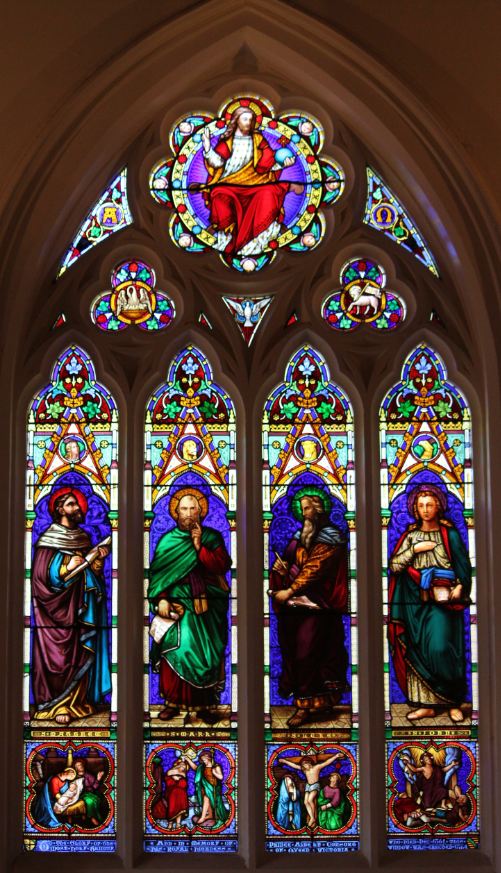
“[..]A magnificent stained-glass window, to cost about £230, has been ordered for one end of the building. The window will contain figures of the four Evangelists, surmounted with a representation of our saviour […]”

Note: This is in reference to the Prince Consort window by Ferguson & Urie.

Prince Consort Memorial window at Holy Trinity Kew

The Prince Consort Memorial window at Holy Trinity Kew

Related posts: 03-04-186329-04-1864 > 13-08-1867

03-04-1863: Holy Trinity Church, Kew, Melbourne, Victoria.

Only five extant windows by the historic Ferguson & Urie stained glass company of North Melbourne have the company name on them. This one at Holy Trinity Church at Kew was installed in the chancel in 1863 but later extensions to the church saw the window relegated to the liturgical north transept where it still is today. The signature mark can’t be seen with the naked eye unless you have a scissor lift or a very tall ladder, which is not advisable. Image-stabilized binoculars will work, but the best bet is a good-quality digital camera with a decent zoom lens and viewing the images on a good-quality computer screen.

The South Bourke Standard, Friday 3rd April 1863, page 2

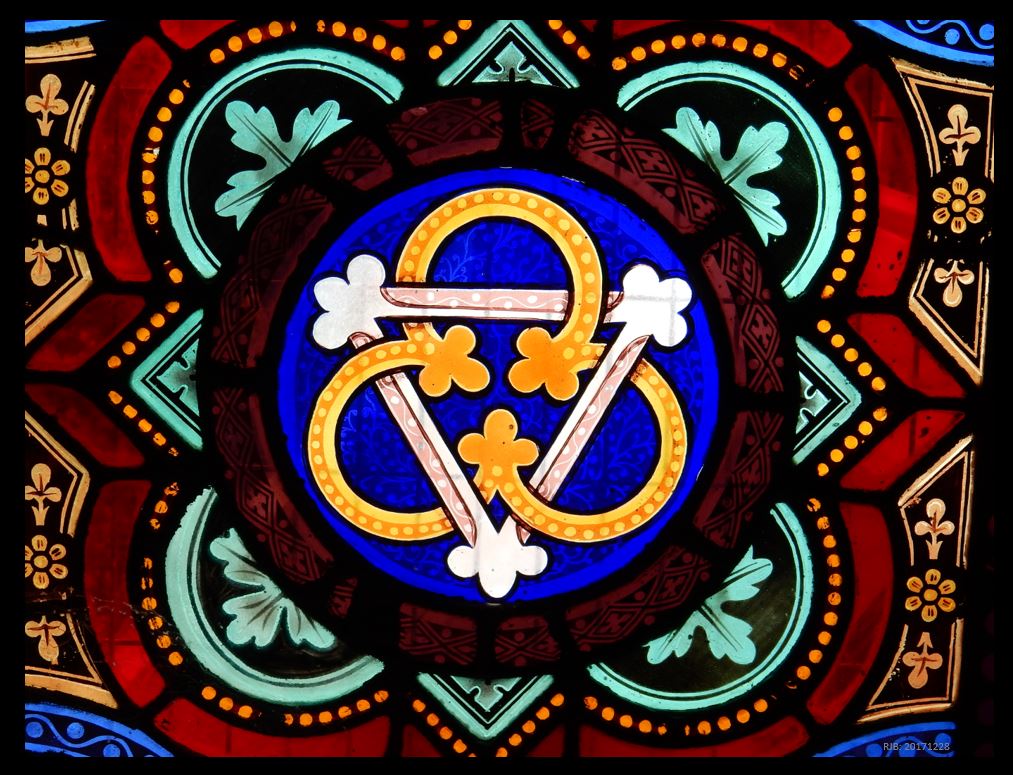
 “Messrs. Ferguson and Urie, glass stainers, North Melbourne, have just completed the stained glass windows for the chancel of Trinity Church, Kew. The centre light contains an elaborately executed emblem of the Trinity, in which the three primary colours only are used. In the top of the same light is the word “Jehova” inscribed in Hebrew characters. The principal medallion in the dexter light has the “Agnus dei” – that sinister light the “Dove”, each surmounted by an appropriate monogram. The ground work is of cathedral tints, enriched with early English ornament, all the details of which is emblematic of the Trinity. – Herald”

Photos were taken 2nd January 2011.

This slideshow requires JavaScript.

Related posts: 24-03-1864 > 29-04-1864 > 13-08-1867


Short link to this page: https://wp.me/p28nLD-3n

© Copyright