Stained Glass Artist – Herbert Moesbury Smyrk (1861–1947)
Herbert Moesbury Smyrk was a stained-glass artist with Ferguson & Urie in the mid-1890’s. He was nomadic, and his stained-glass work can be traced across nearly every major Australian studio from the 1880’s to 1947.
Overview
Herbert Mosebury/Moesbury Smyrk was a widely travelled stained-glass artist and designer who worked across England, the United States, Australia and the Pacific. Though he never ran a studio under his own name for long, he supplied designs and glasswork to many of the leading stained-glass firms of his era, and later in life turned to writing and illustration under the pen name “Herbert Moesbury.”
Early Life and Training
- Born 1 December 1861 at “Brontè Villa,” Guildford, Surrey, England, the seventh child of Charles Frederick Smyrk (a surveyor/auctioneer) and Sarah Ann Miller.
- Baptised 22 June 1862 as “Herbert Mosebury Smyrk” — the unusual middle name came from his grandmother, Elisabeth Mosebury, but he adapted it to the spelling Moesbury.
- Trained with leading London stained-glass firms including Heaton, Butler & Bayne; Lavers, Barraud & Westlake; and Gibbs & Moore. A 1935 press profile states he was apprenticed around age 14 to Powell and Shellard after being selected from the Lambeth Schools of Art.
- The 1881 England census lists him, age 19, as a “Glass Draughtsman” lodging in Elswick, Newcastle-upon-Tyne.
- By his own later account, he stowed away on a ship bound for America, worked in New York and then California (Judson Studios, San Francisco) before heading to Australia.
Melbourne (1884–1891)
- Arrived in Victoria aboard the Chimborazo, reaching Melbourne 23 February 1885, and joined Brooks, Robinson & Co.
- By 1886 he had partnered with Charles Rogers to form Smyrk & Rogers, 166 Little Collins Street. The firm undercut rival Ferguson & Urie to win the glazing contract for St Mary’s Anglican Church, and exhibited at the 1887 Adelaide International Jubilee Exhibition.
- Married Laura Elizabeth Davies in Melbourne on 9 July 1888; they had two sons, Rowland Herbert (1888–1953) and Harold Nelson (1889–1956).
- The Smyrk & Rogers partnership was dissolved by mutual consent in September 1888; Rogers continued the business alone. Smyrk & Rogers completed the stained glass for St Mary’s, North Melbourne, that October.
- A separate 1888 source (of disputed fit with the timeline) links him to Adelaide and the Adelaide Easel Club around this period, including a window for the original St Augustine’s Church, Unley.
- Travelled to London and back with his family (1891–92).
Ferguson & Urie, Melbourne (c. 1894–96)
- Worked as stained-glass artist for Ferguson & Urie, 100 Franklin Street, Melbourne.
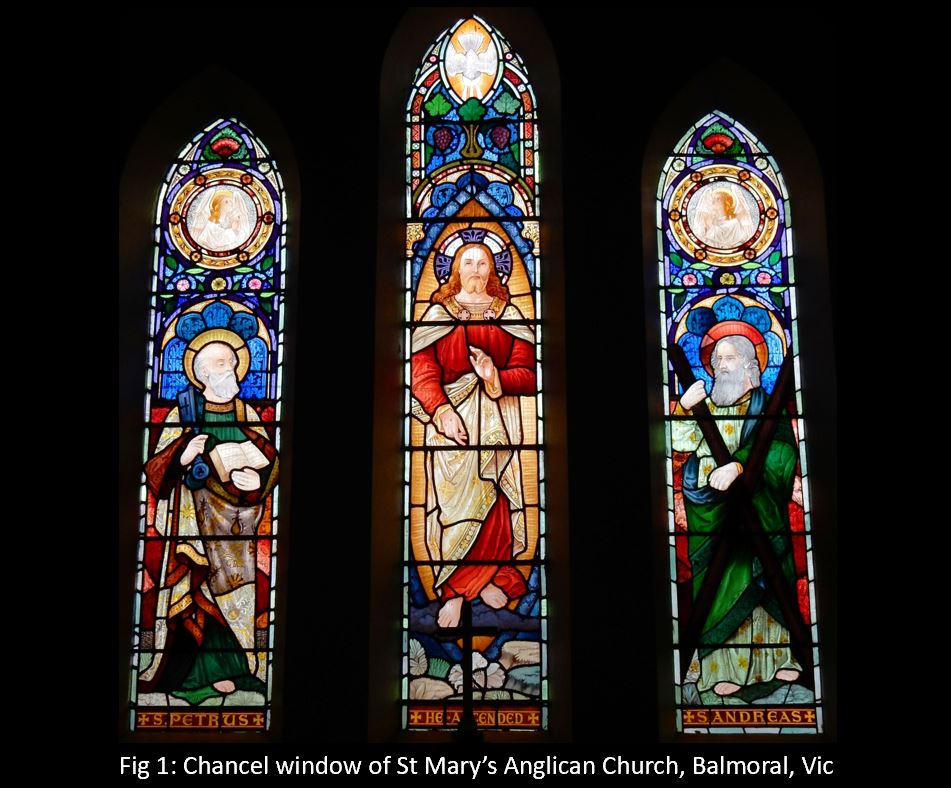
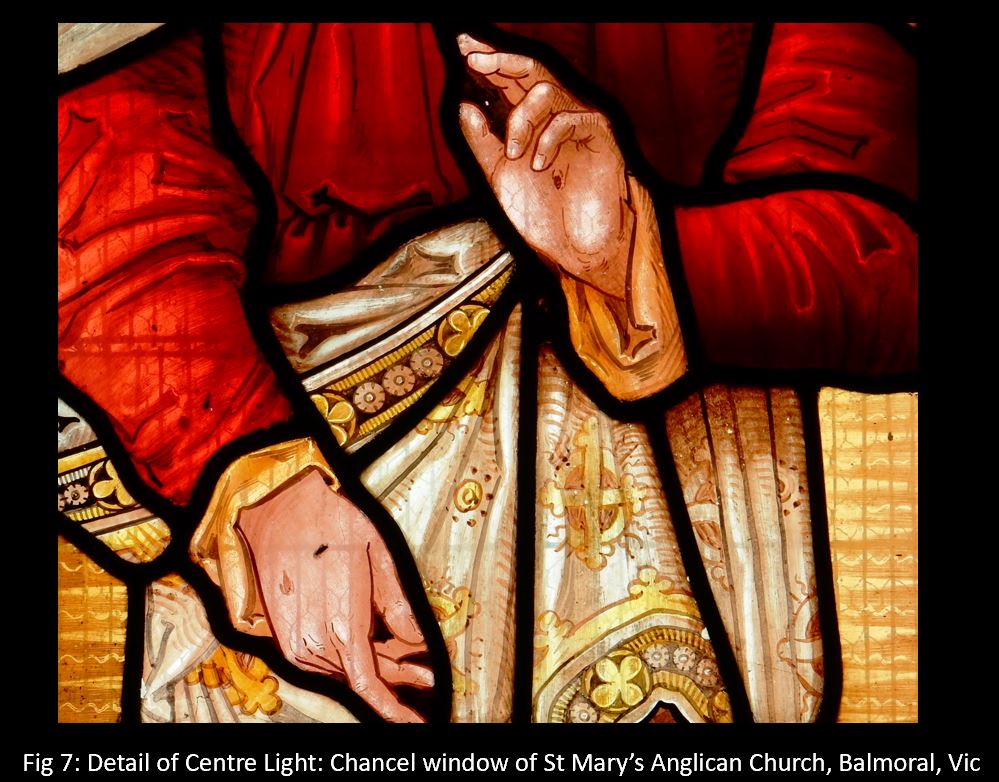
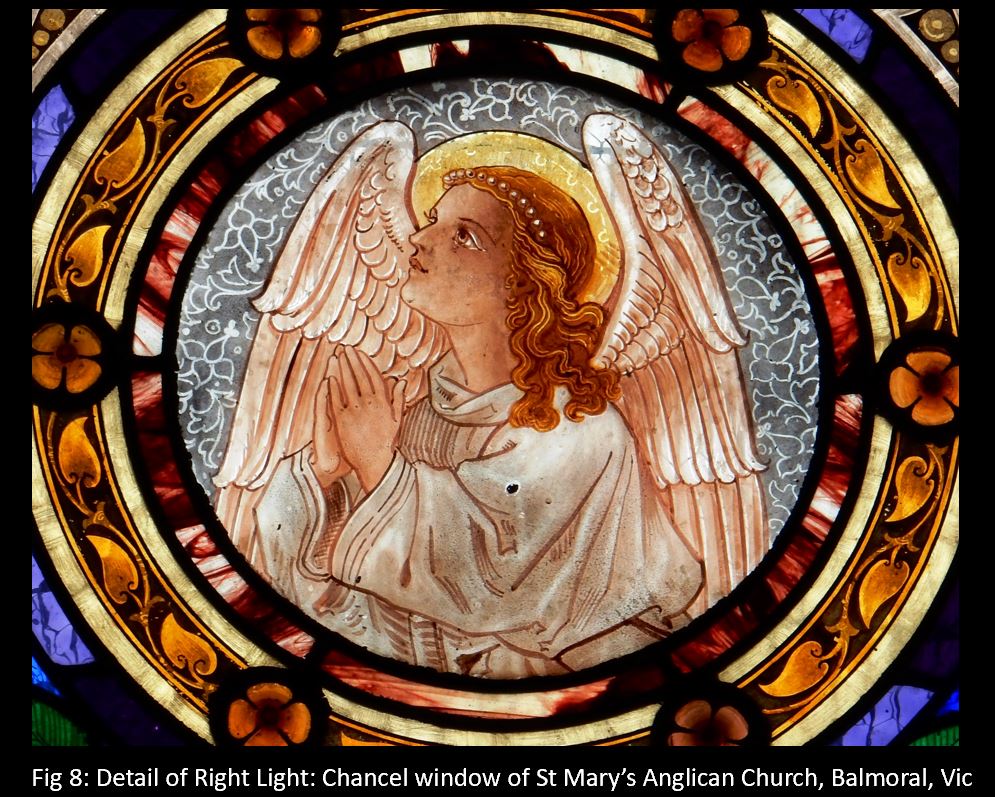
- Attributed works from this period include the C. H. Armytage memorial window at St Mary’s, Balmoral (c. Jan 1895) and the Cr. William Ievers memorial window at St George’s, Carlton (Feb 1896, destroyed by fire in 1924).
- Also associated with decorative glass for a private residence (“Watersdale”) in North Melbourne (1895) and a Last Supper window for St Andrew’s Presbyterian Church, Werribee (1896).
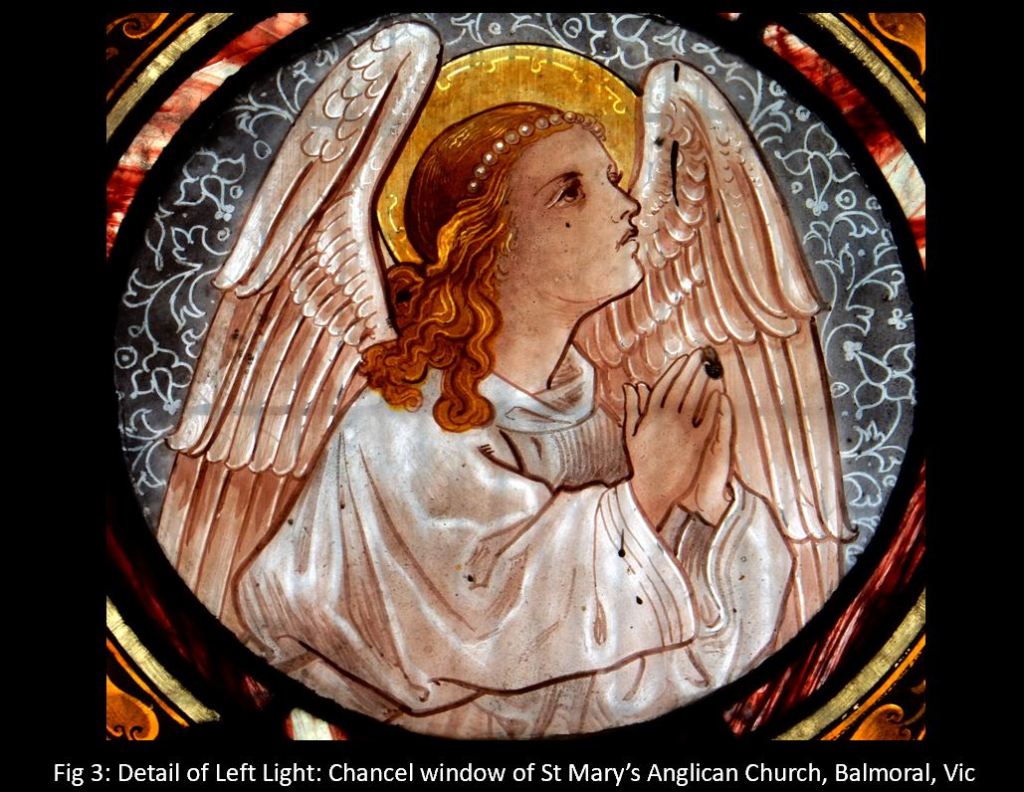
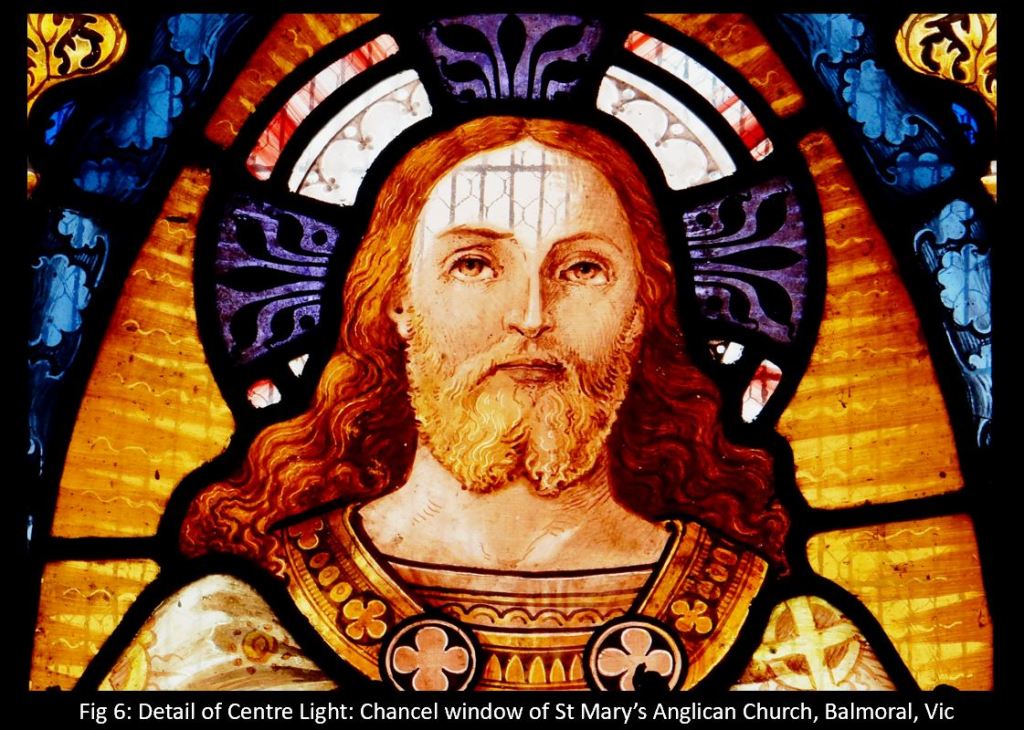
- Contemporary press consistently praised his liberal use of silver stain and his lighter, less heavily painted treatment of glass compared with the norm at Ferguson & Urie.
Adelaide, with E. F. Troy (1896–1898)
- Engaged by decorative firm E. F. Troy, Flinders Street, Adelaide, as chief designer. Notable commissions include:
- The “Good Shepherd” memorial window for Father Joseph Peters, St Ignatius’ Church, Norwood (1896).
- Windows for private clients (C. H. De Rose’s Medindie residence; Delano and Eickhoff commissions).
- The Ascension and Resurrection windows, St Margaret’s Church, Woodville (1897), memorialising John Bristow Hughes and the Harrison family respectively.
- A three-light east window (Ascension, Good Shepherd, Light of the World) for St George’s Church, Gawler, in memory of Canon Coombs (1897–98) — reportedly the largest stained-glass window made in South Australia at the time, at a contract price of £200.
- Windows for the Kent Town Wesleyan Church.
- Active in the Adelaide Easel Club, exhibiting alongside artists such as Hans Heysen; served as the club’s honorary treasurer until resigning in February 1898 ahead of his return to England.
Perth, with Barnett Bros (1899–1900)
- Emigrated with his family to Western Australia in 1899 to join Barnett Bros, Hay Street, Perth.
- Designed “The Good Shepherd,” described locally as the first stained-glass window made in the colony.
- The same design, exhibited by the WA Commission at the 1900 Paris Exposition Universelle, won a bronze medal — a career highlight.
Sydney and Personal Loss (1901–c.1906)
- Living in Sydney by 1901.
- His wife, Laura Elizabeth, died on 7 October 1902 at their Sydney home, aged 33.
- Returned to England afterwards, joining William Morris & Co. (Ruskin House), Westminster, as a principal glass-painting artist for roughly a decade (sources vary between about 9 and 10 years).
Return to the Pacific, America and Later Career
- Around 1916 he travelled again to the United States, working extensively in Los Angeles at the Judson Studios, including a major commission (reported as a $50,000 contract for 16 windows in a $1,250,000 church) executed with four assistants over about a year.
- Spent significant time in Tahiti, an experience he later wrote about at length.
- By 1914 he was associated with James Sandy & Co., Sydney, as head of their new stained-glass and mural decoration department.
- Returned to Australia by 1935, joining Frank G. O’Brien Ltd., Waterloo, Sydney, undertaking new commissions including windows and an altarpiece for St Francis’ Church, Paddington.
- Other firms associated with his work over the decades include R. S. Exton (Brisbane).
Writing and Illustration
- Adopted the shortened pen name “Herbert Moesbury” for his literary and artistic work.
- Published The Trader’s Story (Radcliffe Press, Sydney, 1922), an illustrated narrative poem set in the Pacific islands, noted for its restrained, melodic verse; described as the first in a planned series.
- Contributed illustrated poems to the Weekly Times (December 1922).
- Wrote “The Scapegoat,” a short story of betrayal and reconciliation set partly in Tahiti, published in The Australian Women’s Weekly (March 1939).
- In November 1925, two Adelaide papers (The News and The Mail) published his reminiscences of years lived in Tahiti — covering the island’s history (including the Bounty mutiny), Tahitian hospitality and physical vigour (with lengthy quotation of Captain Cook’s 1769 journal), the monotony of the local diet, the prevalence of elephantiasis among long-term white settlers, and his eventual homesickness and departure for San Francisco.
Family Notes
- Sons Rowland Herbert (1888–1953) and Harold Nelson (1889–1956); Harold later represented Great Britain in diving at the Olympics.
- A separate Smyrk relative, Leopold Charles “Charlie” Smyrk (1876–1956), was a decorated British Army veteran (Boer War and WWI) and long-serving licensee of the Dolphin Hotel, Guildford — connected to Herbert through their shared Guildford-based family (their fathers/grandfather, Charles Frederick Smyrk, was a Guildford auctioneer and surveyor).
Death and Legacy
- Died at Woollahra, Sydney, in 1947, aged 85.
- Never established a lasting studio under his own name, but is credited with designing for numerous major Australian firms (Brooks Robinson, Smyrk & Rogers, Ferguson & Urie, E. F. Troy, Barnett Bros, James Sandy & Co., Frank G. O’Brien Ltd.) across Melbourne, Adelaide, Perth and Sydney, as well as work in England (William Morris & Co.) and the USA (Judson Studios).
- His stylistic hallmarks are noted as refined figure drawing, expressive painted faces, English Gothic composition, luminous colour, and a distinctive lightness achieved through silver stain rather than heavy overpainting.
- Because studio-made windows were typically credited to the manufacturing firm rather than the individual designer, many of his works remain only tentatively attributed, and researchers note his career is still not widely recognised despite its scope.
Compiled from my research collection of newspaper clippings, genealogical records, and museum catalogue entries, with dates and sources as noted in the original clippings from the National Library of Australia’s Trove, Sydney Living Museums, and others.
Short link to this article: https://wp.me/p28nLD-3Ns